What if the tax decision that matters most isn’t a particular allowance or business structure, but how you earn your income? An associate, employed dentist and practice owner can have different tax responsibilities, even when their earnings appear similar. Practice income, personal income, pension arrangements and business structure can also interact, so a decision that looks efficient in isolation may not suit your wider position. These differences are central to tax planning for dentists UK-wide.
Your working arrangement and the full picture of your finances are the right starting points. This guide explains what to consider if you’re unsure which obligations apply or how to plan ahead.
We’ll explore differences between associate, employed and practice-owner arrangements, then cover practical planning steps, record-keeping and important deadlines for 2026. You’ll also find guidance on when to review your business structure and how specialist dental tax advice can connect your personal position with your practice’s needs.
Key Takeaways
- Tax planning for dentists UK-wide starts with understanding how your employment or business arrangement affects your tax responsibilities.
- Clear records of dental income and practice costs support accurate reporting and informed decisions.
- Incorporation isn’t automatically a tax-saving choice; assess its wider implications alongside other business structures.
- Review income, records and deadlines regularly, and seek advice before making significant changes.
- Specialist dental tax support can connect your personal tax position with your practice’s reporting and planning needs.
Why tax planning for UK dentists depends on how you work
Tax planning is the forward-looking, compliant management of income, records, timing and business arrangements so you understand your tax obligations before making decisions. Tax return compliance reports relevant information after the tax year; planning considers how upcoming choices may affect your position. For dentists, start with how you work and earn income, not a one-size-fits-all tax-saving tactic. A general overview of the UK taxation system provides context, but the details depend on your circumstances.
An employed dentist, a self-employed associate and a practice owner may have different responsibilities for reporting income, keeping records and meeting tax obligations. This distinction matters even when two dentists do similar clinical work. A practice owner may need to consider practice accounts and business tax alongside their personal position. An associate’s planning may focus more directly on self-employed income and related records.
Which dentist circumstances change the planning picture?
Employment status isn’t established by job title alone. Both the terms of a contract and the reality of the working arrangement matter when assessing whether someone is employed or self-employed. Status can affect how income is reported and which responsibilities apply. Review arrangements when the work changes instead of relying only on the wording in an agreement.
Income may also come from more than one source. You might have employed earnings alongside associate work, or combine clinical work with practice income. Don’t assume NHS, private and practice income receive identical treatment simply because they relate to dentistry. Keep records that distinguish income sources and relevant costs so each can be considered when preparing returns and reviewing your overall position. This is a practical foundation for tax planning for dentists uk, particularly when your working arrangements or income streams change.
Why planning is not only for practice owners
Tax questions can arise at different career stages, whether you’re newly qualified, an associate, employed or approaching retirement. Personal income, pension decisions and deadlines can all affect your plans, even if you don’t own a practice. The questions to review may change as your earnings, contracts or working patterns develop. Revisit them after a significant change as well as during routine annual planning.
No single structure or relief suits every dentist. A choice that works for one person may not fit another’s income mix, responsibilities or longer-term plans. Start by clarifying how you work, identifying each income source and organising the supporting records. Then decide which planning questions need attention. The aim isn’t to pursue every possible option, but to understand which ones are relevant and compliant in your circumstances.
How UK tax obligations connect to dental income and practice records
Accurate tax decisions depend on understanding how money moves through your dental work and, where relevant, your practice. Associate fees, employed earnings and practice receipts may need different records and reporting, particularly if you have several income sources. Keeping these streams distinct helps you see what you’ve earned, which costs relate to the work and which tax responsibilities may apply.
Complete, timely records make tax planning more reliable because they let you review income, costs and reporting obligations against evidence rather than estimates. They’re useful not only when preparing a return, but also when assessing cash flow or considering a change to your working arrangements.
Income, expenses and evidence dentists should organise
Keep clear records of income received, including relevant invoices, payment statements and bank transactions. If you own a practice, your records may also need to show how practice receipts and costs are recorded in the business accounts. When you have more than one source of dental income, use a consistent method to identify which activity each payment relates to.
Retain evidence for costs and distinguish business expenditure from personal spending. Whether a cost qualifies for tax purposes depends on the applicable rules and the facts, so don’t assume every work-related purchase is allowable. Separating personal and business transactions where practical makes bookkeeping clearer and helps you trace payments to their supporting records.
Which UK taxes may affect a dentist?
The taxes to consider depend on your status, income and business structure. Employment earnings may involve Income Tax and National Insurance through payroll arrangements. A self-employed dentist may need to report profits and consider Income Tax and National Insurance. If a practice operates through a limited company, Corporation Tax may apply to company profits, while the owner’s personal tax position depends on how they receive income. These categories don’t apply in the same way to every dentist.
VAT needs particular care. The treatment of dental services can depend on the nature of the service and the circumstances in which it’s provided; product sales may raise separate questions. Don’t assume all dentistry is treated identically. Check current HMRC guidance against the specific activity before making VAT decisions, including whether to register, charge VAT or reclaim it.
For practical tax planning for dentists uk, connect each income stream to its supporting records, then identify the tax rules relevant to that work and structure. If practice transactions and personal income overlap, tailored dental tax support can help bring the records and reporting questions into one coherent view. Davis & Co LLP’s dental tax support helps dentists consider these matters in the context of their individual circumstances.
Does tax planning for UK dentists mean incorporating? Compare the options
Incorporation is one possible business arrangement, not a default route to lower tax. Compare responsibilities as well as tax: who reports income, how the practice is administered, whether profits are retained or drawn personally, and how ownership may change. Tax outcomes depend on current rules and individual facts, so assess the whole picture rather than relying on a headline rate.
| Arrangement | Typical planning considerations |
|---|---|
| Employed dentist | Employment income and payroll reporting; personal tax position and any other income also matter. |
| Self-employed associate | Business income, records, expenses and personal reporting; National Insurance may be relevant. |
| Partnership | How profits and responsibilities are shared, alongside each partner’s personal tax position. |
| Limited company | Company reporting and Corporation Tax, as well as how owners take money out and manage personal tax. |
Self-employed associate or employed dentist?
A contract’s label alone doesn’t settle employment status. Consider both the agreed terms and how the working arrangement operates in practice. Status can affect how income is reported, how National Insurance applies and which expense rules are relevant. If your arrangements change or the practical reality differs from the contract, assess the facts rather than assuming one status is always preferable.
For example, an associate with additional employed work may need to keep the income and supporting records distinct, then consider their combined personal position. A practice owner may have further business-level reporting responsibilities. The key question isn’t simply which structure seems simpler, but which obligations follow from the arrangement in practice.
When should a practice owner assess a limited company?
Consider a company in the context of how the practice operates and where it may be heading. A company has its own accounts and reporting responsibilities; a personal or partnership arrangement has a different administrative and tax profile. Include the practical work involved in maintaining each structure in your comparison.
Assess expected profits, how much you may need to draw for personal use, and whether some profits could remain in the business. Also consider ownership plans, future changes and your capacity to manage company administration. Money retained in a company isn’t the same as money available for personal spending, so the tax consequences of extracting profits need to be part of the analysis.
For 2026/27, model the alternatives against current rules, including Corporation Tax and the personal tax treatment of income taken from a company. Dividend tax changes can affect the comparison, so an apparent advantage based on company profit alone may not reflect the owner’s overall position. Sound tax planning for dentists uk means testing the options against your income, drawings, responsibilities and plans before changing structure.
A practical UK dental tax-planning checklist for the year
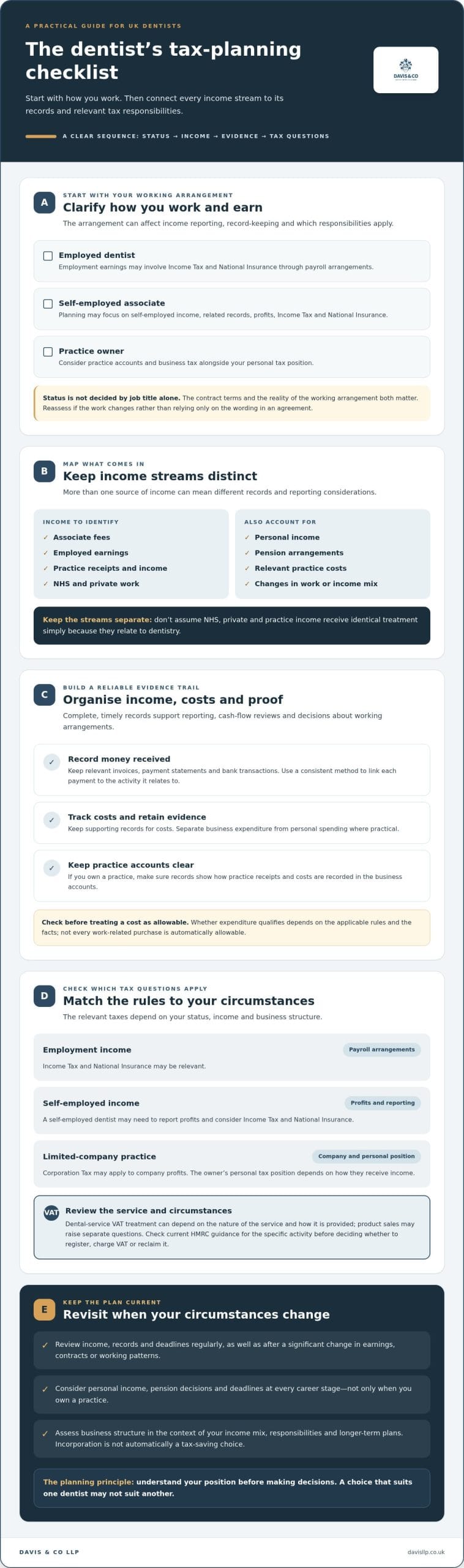
A regular routine makes tax obligations easier to manage and gives you time to consider decisions before they become urgent. Use this checklist throughout the year, adapting it to your work arrangement, income sources and practice structure. Keep routine bookkeeping separate from decisions that could affect your tax position or how the business operates.
Actions to take throughout the tax year
Set a recurring time to review records instead of leaving reconciliation until a filing deadline is close. Work through these steps:
- Review income sources. Reconcile associate, employed, private and practice income against statements, invoices and bank transactions. Investigate differences while the details are still clear.
- Maintain records. Keep supporting evidence for business costs and record the purpose of each expense. Separate personal and business transactions where practical, and update bookkeeping regularly.
- Update your forecast. Compare expected profits and personal drawings with actual results. Note changes in workload, income mix or practice activity that could alter your position.
- Track deadlines. Record the filing and payment dates that apply to you, and check them against current HMRC guidance. For the 2025/26 tax year, the paper Self Assessment return deadline is 31 October 2026; the online return and payment deadline is 31 January 2027. Registration deadlines may also apply if you need to file for the first time.
- Schedule a year-end review. Bring together updated income, costs, forecasts and planned changes so there’s time to assess options before the tax year ends.
Decisions to review before the year end
Routine tasks can follow a schedule; decisions with wider consequences need a fact-specific review before you commit. If you’re considering an equipment purchase, pension contribution or change to your business structure, assess its purpose and wider effect as well as the tax treatment. A purchase doesn’t automatically create a tax saving, and the relevant allowances, limits and rules can change.
- For equipment, identify what the practice plans to buy, when the cost will arise and whether the item may qualify for relief under current rules.
- For pension contributions, review your income, existing arrangements and applicable allowances rather than relying on a general rule of thumb.
- For a structural change, consider administration, reporting, profit retention, personal drawings and future ownership plans as well as estimated tax.
Before acting, model significant decisions against current 2026/27 rules and your circumstances. Verify tax-year dates, allowances and thresholds against current HMRC guidance before relying on them. Where personal and practice matters overlap, tailored dental tax advice can help clarify the implications. You can also explore Davis & Co LLP’s UK tax advice guide for broader planning considerations.
How Davis & Co LLP supports tax planning for dentists
Dental tax questions often span personal finances and practice operations. An associate reviewing income from different arrangements, for example, may need to consider personal reporting alongside records supporting self-employed work. A practice owner may also need to understand how business decisions connect with personal income and tax responsibilities. Specialist dental tax advice can bring these connected questions into a clear, considered plan.
Davis & Co LLP is an independent partnership of Chartered Certified Accountants, founded in 1901, with tax services tailored to dental professionals and practices. Its work spans personal tax and business accounting needs, helping dentists consider obligations and decisions in the context of their circumstances rather than applying a standard approach.
What a tailored dental tax discussion can cover
A useful discussion starts with the facts: how you work, where your income comes from, how the practice is structured and what you want to achieve. This context helps identify applicable compliance responsibilities and the forward-looking questions that merit attention. The aim is to connect the details, not treat each tax issue in isolation.
Depending on your circumstances, the conversation may cover:
- Income and reporting: how employed, associate or practice income affects your personal tax position and records.
- Practice and personal decisions: how drawings, business structure or a planned change may interact with your wider finances.
- Business records and VAT: bookkeeping or VAT compliance questions, with VAT treatment considered against the relevant service and current rules.
- Planning alongside compliance: how current reporting responsibilities fit with decisions you’re considering for the coming tax year.
Recommendations should reflect your objectives and verified information, including the rules that apply at the time. Assess a structural change against the full picture of business administration and personal tax, not an assumed saving. This matters when practice decisions affect your personal position or several income sources need to be considered together.
Taking the next step with a dental tax specialist
Make a discussion more focused by gathering recent income information, records of relevant business costs, details of your current working arrangements and a short list of upcoming decisions. Note any changes already made, such as a new income source or a shift in practice structure. These details help establish what needs attention first and where further analysis may be useful.
For tax planning for dentists uk-wide, Davis & Co LLP brings specialist dental tax knowledge together with personal tax and business accounting expertise. Its Chartered Certified Accountants can consider reporting, planning and compliance in relation to you and your practice, with advice tailored to your circumstances. This provides a clearer basis for informed decisions, while recognising that tax outcomes depend on individual facts and current rules.
Make your next tax decision with a clearer plan
Turn your current tax position into a working plan: identify the decisions ahead, the information needed to assess them and when each decision must be made. This gives you a stronger basis for responding to changes in income, workload or practice, rather than relying on assumptions or leaving choices until a deadline is close.
Effective tax planning for dentists uk-wide depends on how you work and the objectives you’re pursuing. A considered discussion can connect practice questions with your personal tax position and clarify which actions warrant attention now.
Speak to Davis & Co LLP about specialist tax planning for dentists. With the right information and tailored advice, you can approach your next decision with a plan suited to your circumstances.
Frequently Asked Questions
Do dentists in the UK have to complete a Self Assessment tax return?
Not every dentist needs to file a Self Assessment return, but self-employed income or other untaxed income may mean one is required. A dentist whose only income is employment income taxed through PAYE may not need to file, unless HMRC asks them to or another filing condition applies. Associates should check their reporting position rather than assume the practice or payer handles their tax. Good tax planning for dentists uk-wide starts with confirming whether a return is required for the relevant tax year.
Do dentists pay VAT on cosmetic dentistry in the UK?
Some cosmetic dental services may be subject to VAT, but the treatment depends on the purpose and facts of the service. A treatment provided for a qualifying medical or dental purpose may be treated differently from one carried out solely for cosmetic reasons. Product sales can raise separate VAT questions. Keep clear records of the services provided and check current HMRC rules before deciding whether to charge VAT or reclaim related VAT.
Can an associate dentist be treated as self-employed for tax purposes?
Yes, an associate can be self-employed for tax purposes, but the title in a contract doesn’t settle the question. The terms of the arrangement and how the work operates in practice are relevant to determining employment status. That status can affect how income is reported, National Insurance responsibilities and the treatment of expenses. If your working arrangements change, review the position using the current facts rather than relying on an old classification.
How does the NHS Pension Scheme affect a dentist’s tax planning?
NHS pension savings can be relevant to tax planning because pension growth may count towards the Annual Allowance, and some higher earners may face a tax charge if limits are exceeded. Review pension information alongside other pension arrangements and income, rather than looking only at personal contributions. For an associate working through a limited company, only PAYE salary is pensionable, not dividends, which can affect NHS pension accrual.
What happens if a dentist misses a Self Assessment deadline?
HMRC may charge a late-filing penalty, and unpaid tax can lead to interest or further charges. Submit the return as soon as possible, even if you can’t pay the full amount immediately, and check HMRC guidance on payment options and penalties. If there was a reasonable excuse for filing late, you may be able to appeal, but explain the circumstances and follow the current HMRC process. Keep copies of relevant evidence.
Is incorporating a dental practice always more tax-efficient?
No. Incorporation can change how profits are taxed and reported, but the overall outcome also depends on how much profit is retained, how owners take money out and the company’s administration. For example, a practice that needs to distribute most profits to its owner may have a different result from one retaining funds for business purposes. Compare the alternatives using current rules and your expected income, drawings and plans before deciding.
Can a dentist claim tax relief when selling a dental practice?
Possibly. The tax treatment depends on what is sold, how the practice is owned and the seller’s circumstances. A disposal may give rise to a capital gain, and Business Asset Disposal Relief could be relevant if its conditions are met. Don’t assume the relief applies automatically or that every sale is structured alike. Review the proposed transaction and available records before agreeing terms, with calculations checked against current HMRC rules.