An accountant’s value depends on more than accurate year-end figures. Knowing how to work effectively with your accountant means sharing complete records, keeping them informed as circumstances change and agreeing who is responsible for each task.
It’s easy to think the relationship matters mainly when a tax return or set of accounts is due. In practice, clear, timely communication helps your accountant understand your decisions and provide relevant advice. It also helps you stay aware of the information and actions expected from you.
This guide explains how to share changes in your business and personal finances, review transaction details and accounting periods, and prepare useful questions for discussions. It also covers how to agree the scope of work, deadlines and responsibilities from the outset, so you know what your accountant is handling and what remains in your hands.
Key Takeaways
- Tell your accountant promptly about changes to your finances, business plans, staffing or contracts so advice can reflect your current circumstances.
- Review transaction records and confirm which accounting year they relate to, helping spot missing or misclassified information before accounts are prepared.
- Bring a concise list of questions to discussions, disclose relevant details openly and follow up on unresolved actions.
- Agree the scope of work, deadlines and responsibilities at the outset, including the records and information you need to provide.
1. Proactive communication about business and personal financial changes
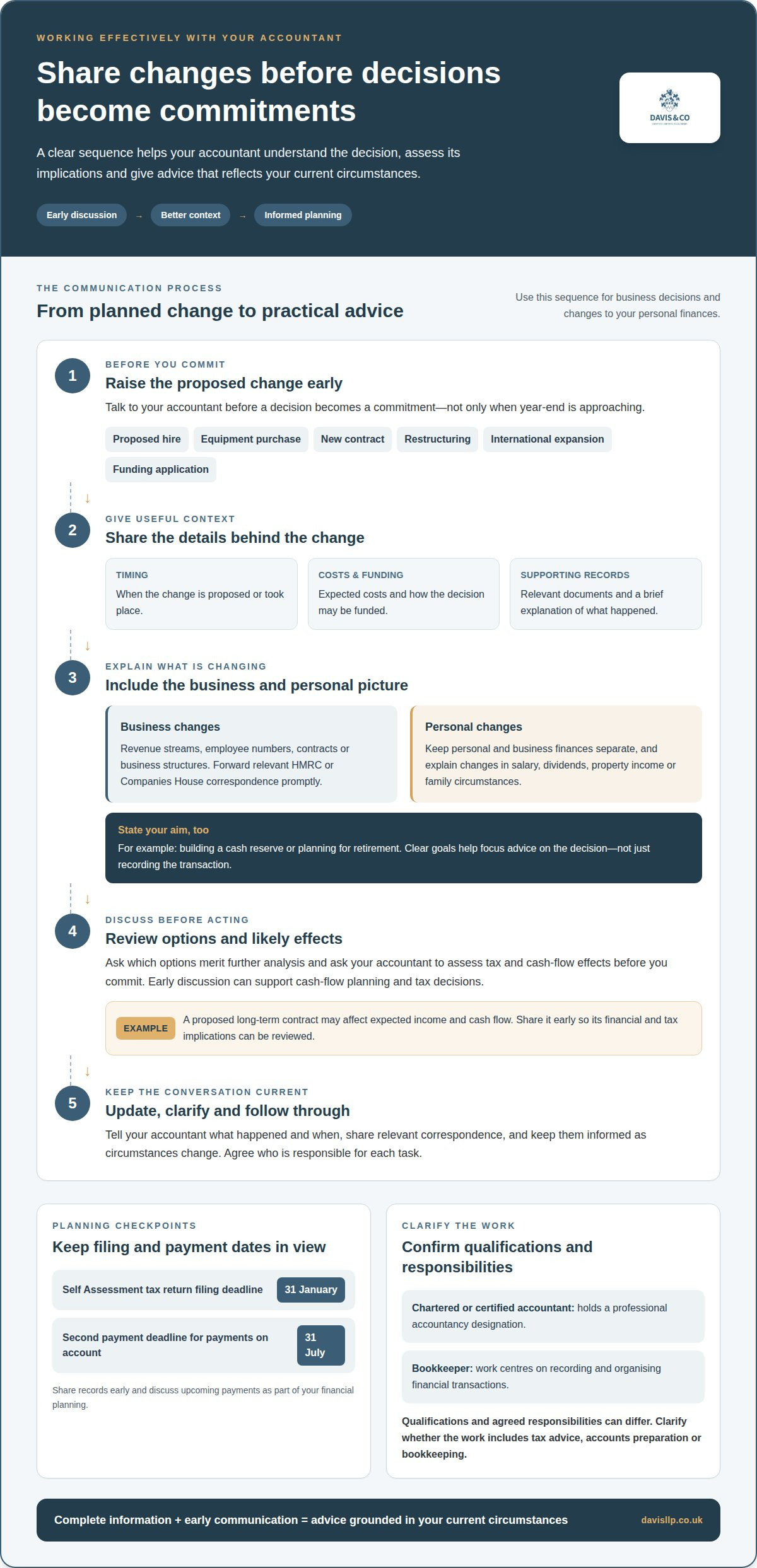
Tell your accountant about financial changes before decisions become commitments. A proposed hire, equipment purchase, new contract or restructuring can affect forecasts and tax treatment. Share the timing, costs, funding and relevant documents, then ask which options merit further analysis. Early discussion supports cash-flow planning and tax decisions, so don’t wait until year-end to get in touch.
Keep personal and business finances separate, and explain changes in salary, dividends, property income or family circumstances. These details may affect personal tax planning, particularly if business income varies or you’re considering withdrawing funds. State your aims, such as building a cash reserve or planning for retirement. Clear goals help your accountant focus advice on the decision, not just record the transaction.
Update your accountant when revenue streams, employee numbers, contracts or business structures change. Forward relevant HMRC or Companies House correspondence promptly, with a brief explanation of what happened and when. For example, a new long-term contract may affect expected income and cash flow. Telling your accountant early gives them a better basis for reviewing the financial and tax implications.
Before a major purchase, hiring decision, international expansion or funding application, outline your options and likely timing. Ask your accountant to assess the tax and cash-flow effects before you commit. If your business is considering overseas sales, for instance, raise the proposed market and trading arrangement early. This allows you to discuss relevant planning before a decision is made, rather than trying to resolve its implications afterwards.
A chartered accountant and a certified accountant hold professional accountancy designations; a bookkeeper’s work centres on recording and organising financial transactions. Qualifications and agreed responsibilities can differ, so clarify whether the work includes tax advice, accounts preparation or bookkeeping.
For Self Assessment, plan around the 31st January tax return filing deadline. According to the UK Government, the second payment deadline for payments on account is 31 July. Share records early and discuss upcoming payments with your accountant as part of your financial planning.
2. Checking transaction details and accounting years
Before each meeting, gather the questions you want answered and the records they relate to. Prepare a short agenda covering financial performance, unusual transactions and decisions awaiting action. For a purchase that differs from routine spending, bring the invoice and explain its business purpose. This gives your accountant context to review the entry and ask useful follow-up questions.
Provide organised receipts, invoices, bank statements and tax forms, along with any records your accountant has requested. Keep transaction dates, descriptions and amounts clear, and flag missing paperwork rather than leaving gaps unexplained. Confirm which accounting period each item belongs to, especially if a payment, invoice or contract falls near year-end. Correct timing matters when records are used to prepare accounts or review performance.
Digital bookkeeping can make records easier to access and share. Use consistent categories, attach receipts to transactions where your system allows, and store supporting documents with the relevant records. Before sending a report, check that its period matches the accounting year under discussion. A concise note explaining an unusual entry helps your accountant understand it without guesswork.
Arrange regular check-ins at a frequency suited to your business, and agree what each meeting should cover. A review might examine recent results, forecasts, cash-flow concerns and outstanding actions. Send relevant documents beforehand, then record decisions, responsibilities and follow-up questions. A steady routine makes the relationship more useful than relying on a single year-end conversation and gives your adviser a clearer view of your plans.
To prepare for an accountant meeting in the UK, bring an agenda, relevant records and a list of unresolved questions. To check credentials, ask which accountancy qualification and professional-body membership the accountant holds, then confirm membership through that body’s official directory. Where transaction review or performance reporting needs greater structure, regular financial reviews can help turn records into informed discussion.
3. Communicating transparently and asking questions
Before a discussion, gather your questions into one concise list and link each to a transaction, report or decision. Instead of asking whether the figures “look right”, identify the figure and explain what you expected. For example, ask why a supplier cost differs from the invoice or how a forecast accounts for a late customer payment. Specific questions help your accountant explain the reasoning clearly. This is one practical part of how to work effectively with your accountant.
Share all relevant financial activity, even if an amount seems minor or a transaction feels awkward to explain. Incomplete or inaccurate information can lead to errors in accounts, tax returns or advice. Omitted details may also prevent your accountant from identifying relevant deductions. Explain unusual payments, disputed invoices and changes in income, and provide supporting records where available.
Ask for unfamiliar accounting terms to be explained in plain English. If a report shows a variance, clarify which periods or categories it compares and what may have caused the difference. Understanding basic concepts such as revenue, expenses and cash flow makes it easier to discuss the implications without having to interpret technical language alone.
Communication should also include colleagues who hold financial information. Ask the person managing sales to explain a change in customer billing, or have the staff member handling purchases clarify an unusual supplier charge. Share the context with your accountant rather than forwarding isolated figures. Knowing how to work effectively with your accountant also means connecting records to the operational decisions behind them.
After each discussion, record the agreed action, its owner and any information still required. Follow up on unresolved points instead of letting them disappear into a long email thread. During December or January, clearly mark a pressing query unrelated to Self Assessment as urgent. A transparent exchange gives your accountant a more accurate basis for advice and helps both parties keep decisions and responsibilities visible.
4. Agreeing the accountant’s scope of work and client responsibilities
Put the working arrangement in writing before accounts, tax returns or payroll work begins. Specify which services are included, what documents you must provide, who handles each task and when information is due. For example, clarify whether bookkeeping, preparing statements and submitting a return are all part of the agreed scope. A clear division prevents assumptions from becoming missed tasks.
Set out the process for deadlines, approvals and questions. Agree how your accountant will flag missing records and how you’ll approve completed work. You remain responsible for supplying accurate information and meeting agreed dates. If your business changes its payroll arrangements or adds a new income stream, discuss whether this changes the work required and record any revised responsibilities.
Ask how additional work is handled before it becomes necessary. For instance, a request to prepare management reports may be outside an agreement covering annual accounts. Define how changes to the scope will be discussed, approved and reflected in delivery dates. This gives both parties a practical way to manage unexpected requests without losing sight of existing deadlines.
When choosing an accountant in the UK, ask which qualifications and relevant experience they hold, what work they’ll undertake, and who will handle your account. Clarify how they communicate, what deliverables you’ll receive and how they manage deadlines. A qualified adviser whose expertise matches your needs can make responsibilities and reporting clearer.
Fees depend on the work involved and are given after a quote request; factors include the services required, the complexity of your records and the frequency of reporting. Ask what the fee covers, how extra work is charged and when payment is due. That makes the commercial terms as clear as the accounting responsibilities.
For a defined arrangement around your accounting responsibilities, discuss your accounting requirements and agree the scope, records and timelines before work begins.
Davis & Co LLP
Davis & Co LLP helps business owners and individuals connect accounting discussions with wider financial priorities. Turn to the firm when a business change, personal tax question or growth decision calls for informed financial input. Its International Tax Planning and Personal Tax Services address tax considerations, while Business Growth Acceleration and Cash Flow Management support planning and financial decision-making.
A productive relationship starts with clear information about your circumstances, priorities and upcoming decisions. Sharing those details helps shape discussions around what matters to you, whether you’re reviewing cash flow, considering growth or managing personal tax affairs. Agreeing responsibilities and keeping communication open supports a more informed working relationship.
Make your next financial conversation purposeful
A productive relationship with your accountant can develop as your priorities change. Use each discussion to connect financial information with the decisions ahead, rather than simply closing a task. The practical habits involved in how to work effectively with your accountant create a basis for considered conversations about business direction and personal circumstances.
Davis & Co LLP supports this work through International Tax Planning, Business Growth Acceleration and Cash Flow Management. The right starting point depends on the question you need to address, whether it concerns planning across borders, assessing growth priorities or understanding cash flow. A focused conversation can help identify the financial considerations relevant to your next decision.
Bring the issue you’re considering and the outcome you want to discuss. Start a conversation with Davis & Co LLP about the support that fits your circumstances, and take your next step with greater clarity.
Work Effectively With Davis & Co LLP
Davis & Co LLP can help put effective accountant collaboration into practice. Share your goals, records and questions to start a discussion about support suited to your needs.
Turn to Davis & Co LLP when you need help with business growth acceleration, cash flow management, management accounts or bookkeeping, or support with personal, trust, property or international tax. The firm also offers audit and assurance, company secretarial services, payroll, VAT compliance and dental tax specialist services.
Frequently Asked Questions
What is an Accountant’s Role?
An accountant helps you understand financial information and use it to meet reporting, tax and business needs. For example, they can explain what a change in gross margin may indicate and what further information could clarify it. The role depends on the agreed engagement: some work focuses on compliance, while other arrangements include interpreting results to inform planning and business decisions.
How often should you communicate with your accountant?
Set a communication rhythm that reflects your reporting needs and how quickly circumstances change. A business reviewing cash flow frequently may benefit from more regular discussions than one with stable, straightforward activity. Agree how you’ll raise urgent matters, share routine updates and review completed work. Revisit the schedule if your operations change, such as when entering a new market or experiencing seasonal shifts.
How can you agree clear responsibilities and deadlines with your accountant?
Turn the agreed scope into a simple schedule showing each deliverable, its owner, the required input and the approval point. For example, note who prepares a draft report, who supplies missing explanations and who signs off the final version. Include a way to raise delays or changed priorities. Review the schedule when the work changes, so responsibilities remain clear rather than relying on assumptions.