Good estate planning brings practical decisions together before a family needs to make them under pressure. Trust and estate planning services can help organise powers of attorney and living wills, consider how trusts fit into a family’s plans, and identify tax and administration issues. In the UK, the inheritance tax nil-rate band is £325,000, and HM Revenue & Customs says inheritance tax is charged at 40% on the amount by which an estate exceeds it.
It’s understandable to want arrangements that protect family wealth and make your wishes clear. The right approach depends on your assets, family circumstances and how you want decisions to be made. A sound plan connects legal documents with the tax and practical responsibilities that follow.
This article explains how an estate planning adviser can support powers of attorney and living wills, trust administration, compliance and family wealth planning. It also covers key considerations when deciding whether a trust may suit your family’s needs.
Key Takeaways
- Match powers of attorney and living wills to the decisions you want trusted people to make if you cannot make them yourself.
- Build trust administration into the plan: according to HM Revenue & Customs, new trusts must be registered with the UK Trust Registration Service within 90 days of creation.
- Choose a trust by considering its purpose, who will manage the assets, who should benefit and how much control you want to retain.
- Consider how trust tax treatment and family circumstances affect wealth planning before deciding how assets should be passed on.
How can an estate planning adviser help?
An adviser can connect tax planning with your wishes for family members and the practical management of assets. Well-structured trust and estate planning services help identify which decisions need attention, from lifetime transfers to the responsibilities trustees may later take on.
Inheritance Tax Planning
According to HM Revenue & Customs, the UK inheritance tax nil-rate band is currently £325,000, and inheritance tax is charged at 40% on the amount by which an estate exceeds the nil-rate band. The UK Residence Nil Rate Band is an additional £175,000 per person when a main residence is left to children or other direct descendants. HM Revenue & Customs says an individual can give away up to £3,000 each UK tax year under the annual gift allowance without inheritance tax liability. Gifts made within the 7 years before a person’s death can be included when assessing Inheritance Tax, according to HM Revenue & Customs.
An adviser assesses exemptions, reliefs and trust charges against the family’s assets and intended beneficiaries. Trust assets may face charges when they leave a trust and on each 10-year anniversary, so timing and trust terms matter.
Lifetime Trust Transfers
A lifetime transfer into trust can affect inheritance tax and control over assets. It may incur inheritance tax at 20% on the amount exceeding the settlor’s available nil-rate band, reliefs and annual exemptions. Trusts may also face charges of up to 6% when assets leave and on each 10-year anniversary. Assess the transfer’s purpose, timing and effects before deciding whether the arrangement fits your family’s plans.
Tax Considerations for Inheritance
Trust taxation depends on the type of trust, with distinct rules for income tax, capital gains tax and inheritance tax. Capital Gains Tax may be payable when an asset enters or leaves a trust. An adviser can consider these consequences together rather than treating inheritance tax in isolation.
Choose between a solicitor, tax adviser and financial planner by identifying whether your priority is legal documents, tax analysis or broader financial planning. UK estate-planning rules differ across England and Wales, Scotland and Northern Ireland, each of which has its own legal system. Consider the relevant jurisdiction when arranging documents and administration. Tailored trust and estate planning services can help bring related tax considerations into view.
Lasting powers of attorney and living wills
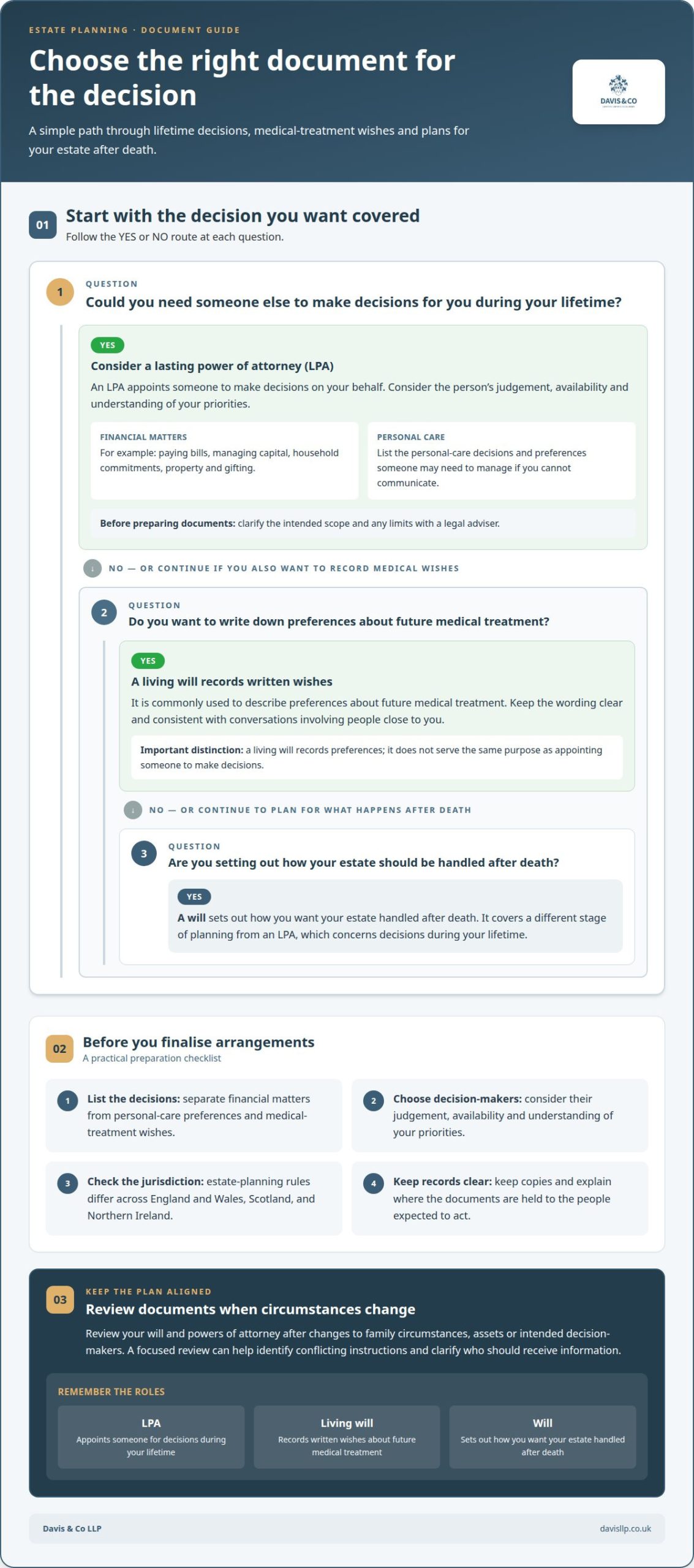
Start by listing decisions someone else may need to manage if you cannot communicate. Separate financial matters, such as paying bills or managing capital, from personal care preferences. This inventory helps clarify what a lasting power of attorney should address and what belongs in a will or written treatment wishes.
A lasting power of attorney is a planning document for appointing someone to make decisions on your behalf. Consider the person’s judgement, availability and understanding of your priorities. For example, someone managing financial matters may need clear guidance about household commitments, property and gifting. Discuss the intended scope and any limits with a legal adviser before preparing the documents.
A living will is commonly used to record written wishes about future medical treatment. It describes preferences; it does not serve the same purpose as appointing someone to make decisions. Keep the wording clear and consistent with conversations involving those close to you. Since terminology and legal effect can depend on the relevant UK jurisdiction, establish where the arrangement will apply.
Consider wills and powers of attorney together, but remember that they address different stages of planning. A will sets out how you want your estate handled after death, while an LPA concerns decisions during your lifetime. Review both after changes to family circumstances, assets or intended decision-makers. A focused review can identify conflicting instructions and clarify who should receive information.
Before finalising arrangements, prepare a concise record of your priorities, key financial commitments and preferred decision-makers. Keep copies and explain where the documents are held to the people expected to act. For related financial oversight, an audit and assurance review can help examine relevant records as part of wider planning.
Trust administration and compliance
Trustees must follow the trust’s terms while managing assets for beneficiaries. Administration also involves registration, accurate records and tax responsibilities.
According to HM Revenue & Customs, new trusts are required to register with the UK Trust Registration Service within 90 days of creation. Changes to a trust must also be reported online through the service within 90 days, a requirement applying since 1 September 2021. Trusts that existed on 6 October 2020 need registration, even if they have since ended. A trustee should keep records of assets, decisions, income and distributions, then review them against the trust deed. Trustees must act in beneficiaries’ best interests and follow the trust’s terms. A trustee who is also a beneficiary must still consider all beneficiaries impartially. These steps support tax reporting and a clear record of how decisions were made.
Handling Probate
Probate is part of estate administration, covering the authority and processes needed to deal with a person’s estate after death. The required steps depend on the estate, the will and the jurisdiction. A specialist can help organise records of assets and liabilities, identify the will’s instructions and establish which administration tasks are required. Funeral payments, taxes and debts are among the first costs paid from an estate. Clear records help those administering it understand what remains for beneficiaries.
Administering an Estate
Estate administration involves gathering information about assets, settling liabilities and distributing what remains in line with the will or applicable rules. Personal representatives should record each decision, payment and transfer. This may include bank accounts, property, income and pension information, as well as tax matters arising during administration. A structured process reduces the risk of overlooking an asset or distributing funds before obligations are addressed. The administrator should also update beneficiaries on relevant progress and retain supporting documents. If a trust forms part of the arrangements, consider its terms and records alongside the estate accounts. This makes probate and wider estate administration traceable, rather than treating them as separate tasks.
Family trusts and wealth protection
A family trust allows trustees to manage assets for named beneficiaries under the trust deed. It can set out how wealth is used, such as providing for a child’s education, and define who controls distributions. Trust and estate planning services can help families assess whether this structure fits their purpose, beneficiaries and desired level of control.
Choosing a trust involves considering its type, appointing trustees, drafting the deed and transferring assets. A discretionary trust gives trustees discretion over how and when beneficiaries receive funds; a bare trust holds assets for a beneficiary. Their tax treatment can differ: discretionary trusts often face higher tax rates, while bare trusts are taxed at the beneficiary’s personal rate.
Most UK trusts can last up to 125 years, although many are designed for shorter periods. A defined term may better suit a particular family objective, such as funding education. Gifts between spouses or civil partners may be completely exempt from inheritance tax, but that does not make every trust appropriate. Ownership, beneficiaries and retained control still matter. Trust and estate planning services should consider these details alongside the arrangement’s tax and administration responsibilities, rather than treating a trust as a standalone wealth-protection measure.
Families considering a trust can discuss trust tax planning in relation to its purpose, administration and tax consequences.
Davis & Co LLP: International Tax Planning
Davis & Co LLP can help families assess the tax considerations that sit alongside trust and estate planning. Its International Tax Planning and Trust Tax Services are relevant when family members, assets or financial affairs cross borders, or when a trust’s tax treatment needs careful review. The work can help clarify tax implications and support informed decisions about managing family wealth; legal documents and decisions remain distinct from tax planning.
For families with business interests, Business Growth Acceleration and Cash Flow Management may also help address connected business considerations. A discussion is useful when a trust is being considered, its assets or beneficiaries change, or international circumstances affect the family’s tax position. Contact Davis & Co LLP to discuss the tax-planning support relevant to your circumstances.
Put your family’s plans into motion
A useful next step is to turn broad intentions into decisions that can be reviewed and maintained. Consider which arrangements need attention first, who should be involved and how changes in family or financial circumstances could affect them. A clear starting point makes it easier to keep your wishes aligned with the practical administration of your affairs.
Well-planned trust and estate planning services bring tax considerations into this process and help you examine how your arrangements fit together. If international matters or trust taxation are involved, Davis & Co LLP can discuss relevant tax-planning support and business considerations.
Share the circumstances you want your planning to address and the questions you need resolved. Contact Davis & Co LLP to discuss a considered next step for your family’s plans.
Davis & Co LLP and Trust and Estate Planning
Davis & Co LLP provides Trust Tax Return Services for people considering the tax responsibilities connected with trusts and estates.
When you need help with trust tax matters as part of wider financial planning, Davis & Co LLP also offers Personal Tax Services, Property Tax & Accountants and related business services.
Frequently Asked Questions
What happens if you don’t plan your estate?
Without a will or clear instructions, your estate may be distributed under the intestacy rules that apply in your part of the UK. The outcome may differ from your wishes, particularly where family relationships or shared assets are complex. For example, an unmarried partner may not inherit under intestacy rules. Keeping your will and asset records current gives those handling your affairs clearer direction.
What is a trust, and how does it work?
A trust sets out how trustees hold and manage assets for beneficiaries under the trust deed. For example, trustees might use funds for a child’s education and distribute remaining assets according to the deed. The deed identifies the trust’s purpose and guides decisions. Trustees also record distributions and decisions, helping beneficiaries understand how the arrangement is being administered.
When does inheritance tax need to be paid?
Inheritance tax is addressed during estate administration if tax is due after relevant allowances and reliefs are considered. Taxes and debts are among the first costs paid from an estate, before remaining assets are distributed to beneficiaries. Personal representatives must establish the estate’s value, identify relevant gifts and account for any tax due. The payment timetable depends on the estate’s circumstances and the administration process.
Are trusts still tax efficient?
A trust may suit a family’s plans, but it is not automatically tax-efficient. Tax treatment depends on the trust type and may involve income tax, capital gains tax and inheritance tax. For example, discretionary and bare trusts may be taxed differently. Weigh the intended control and beneficiaries’ access against tax and administration responsibilities, rather than judging a trust by one possible tax outcome.
Can I leave a leasehold property in my will?
You can address a leasehold interest you own in your will, but the outcome depends on ownership and the lease terms. Check whether the property is owned solely or jointly and consider any relevant lease conditions. The way a jointly owned property passes on death depends on the ownership arrangement. Your will should reflect the actual ownership arrangement and intended beneficiaries.
Do trusts avoid inheritance tax in the UK?
No, a trust does not automatically avoid inheritance tax in the UK. The tax consequences depend on the trust type, the assets, their value and when they are transferred. Some transfers or trust arrangements can create tax charges, while available exemptions and reliefs may affect the calculation. Assess the trust’s purpose alongside its tax treatment and ongoing administration before deciding whether it fits your family’s plans.