When to hire your first accountant depends less on how long you’ve been trading than on whether financial complexity is starting to affect your decisions. It’s understandable to think a small business can manage alone while transactions are few and records seem straightforward. But growth, VAT, payroll or uncertainty about tax responsibilities can change what you need well before the business feels “large”.
This guide explains the practical signs that it may be time to appoint an accountant and what support could make a difference. You’ll also see how bookkeeping differs from wider accounting advice, so you can decide which tasks to delegate while keeping important business decisions in your hands.
We’ll cover common triggers, from increasingly complex records to plans for growth, and outline what to gather before an initial conversation. The aim isn’t to suggest every new business needs an accountant immediately. It’s to help you judge when tailored support could give you greater clarity and confidence.
Key Takeaways
- There’s no fixed business size or incorporation date for deciding when to hire your first accountant. Consider whether compliance, workload or financial decisions are becoming harder to manage.
- Hiring staff, adding sales channels and handling more complex transactions can change the record-keeping and reporting support you need.
- Compare self-managed software, bookkeeping and accountant-led support to see which responsibilities you can manage and where specialist input may help.
- Gather bank records, sales and expense information, previous filings and a clear outline of your goals and concerns before your first discussion.
- Davis & Co LLP is an independent partnership of Chartered Certified Accountants founded in 1901, supporting businesses with services ranging from bookkeeping to management information and growth advice.
When to hire your first accountant: the early signs your business needs support
There’s no single business size, trading history or incorporation date that determines the right time to appoint an accountant. A sole trader with a few regular clients may need advice on a particular tax or record-keeping question. A growing company may manage routine bookkeeping confidently but want support with cash flow or future plans.
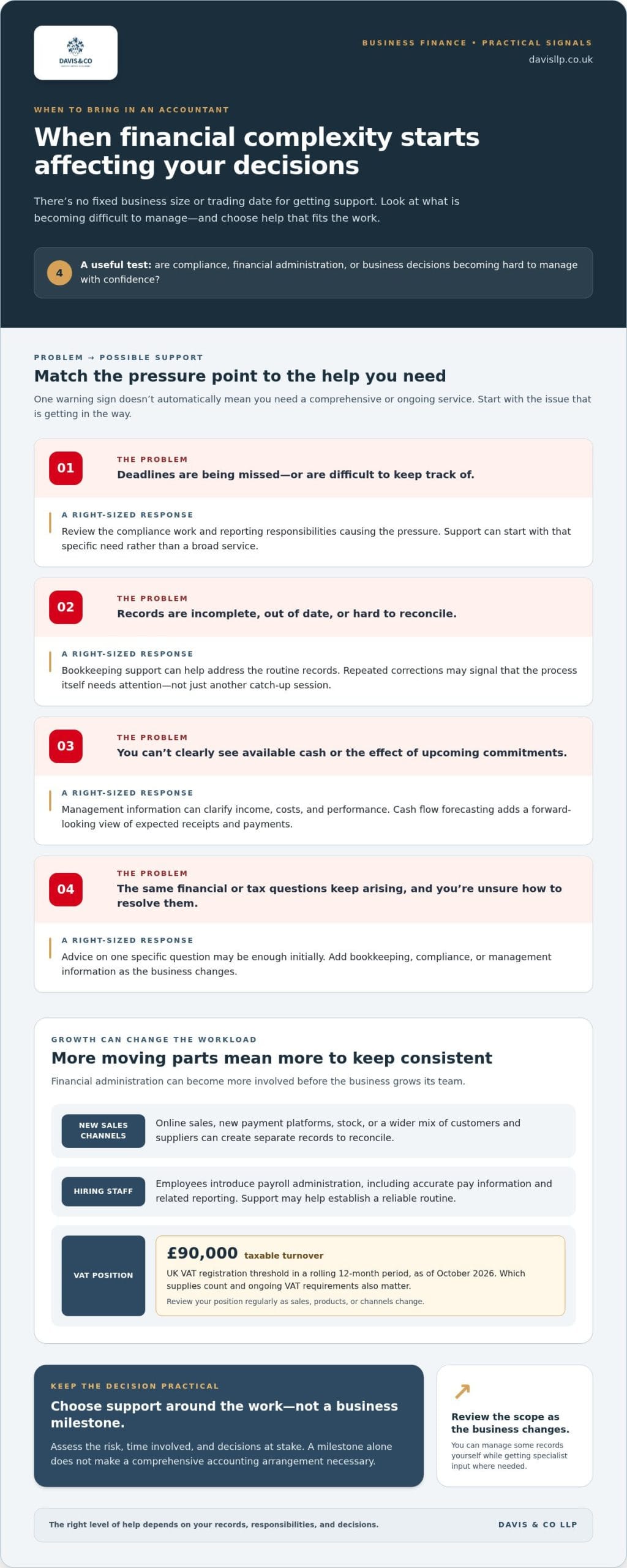
A more useful test is whether compliance, financial administration or business decisions are becoming difficult to manage with confidence. An accountant’s work can extend beyond preparing accounts. What is an accountant offers a neutral overview of the profession and its different areas. Consider getting advice if you recognise any of these signs:
- Deadlines are being missed or are difficult to keep track of.
- Records are incomplete, out of date or hard to reconcile.
- You can’t clearly see what cash is available or how upcoming commitments may affect it.
- The same financial or tax questions keep arising, and you’re unsure how to resolve them.
One sign doesn’t automatically mean you need extensive or ongoing support. Use it as a prompt to assess the risk, time involved and decisions at stake. Advice on one specific issue may be enough initially. Review the scope as the business changes.
Which signs suggest you have outgrown managing the accounts alone?
When bookkeeping regularly falls behind, it becomes harder to understand how the business is performing. Repeated corrections may point to a process that needs attention, rather than simply more time spent catching up. If you can’t readily distinguish expected income from money available to use, financial decisions become less certain.
Consider the time involved too. Hours spent sorting receipts, checking entries or interpreting figures are hours not spent on sales, service delivery or operations. This doesn’t mean every business needs a full-time accountant. It means the level of help should reflect the complexity of the work and the value of your time.
Should you hire an accountant when starting a business?
Early guidance can help you establish practical record-keeping habits and understand which financial information to monitor. It can also be useful to discuss how to keep business and personal transactions clear, what records to retain and which reporting or tax questions apply to your circumstances.
You don’t have to commit to a broad, ongoing service from the outset. You could begin with advice on setup, then add bookkeeping, compliance or management information as activity increases. For a wider view of how accounting support can contribute to business decisions over time, read our strategic small business accountant guide.
What changes make an accountant more valuable as your business grows?
Growth can change your financial administration before it changes the size of your team. A business that once handled a small number of regular invoices may add online sales, new payment platforms, stock or a wider mix of customer and supplier arrangements. Each channel can create separate records to reconcile, making it harder to check that the figures are complete and consistent.
Year-end reporting can also become more involved as transactions increase or the business structure changes. Treat the question of when to hire your first accountant as a prompt to review your processes and responsibilities, not as a rule tied to a particular turnover or headcount. Reaching a business milestone doesn’t by itself make appointing an accountant a universal legal requirement.
How do staff, payroll and VAT affect the decision?
Taking on employees introduces payroll administration, including keeping accurate pay information and managing related reporting. If payroll takes time away from running the business, or you’re unsure how to organise the process, specialist support can help establish a reliable routine.
VAT is another area to monitor as sales grow or business activities change. As of October 2026, the UK VAT registration threshold is taxable turnover of £90,000 in a rolling 12-month period. The threshold is only one part of the picture: it also matters which supplies count towards taxable turnover and how you meet ongoing VAT requirements. Review your position regularly rather than waiting for a particular number of employees. Changes in sales, products or sales channels may affect what you need to consider.
These milestones call for a review of the work involved, not an automatic move to a comprehensive accounting arrangement. You may need help with payroll or VAT compliance while continuing to manage other records yourself.
When does an accountant help with cash flow and growth?
Historical records show what has happened. Management accounts can help you use that information to make decisions. Regular details on income, costs and performance can help you spot changes, compare results with expectations and consider what the business can reasonably commit to next.
Cash flow support adds a forward-looking view. Forecasting expected receipts and payments can help you assess whether the timing of customer payments, supplier bills or planned expenditure may put pressure on available cash. This can inform practical choices, such as when to purchase stock or whether a planned expansion fits the business’s finances.
As your needs develop, support can move from routine records and compliance towards management information and growth advice. Explore our UK business accounting and growth guide for a broader perspective. For tailored support with bookkeeping, management accounts or cash flow, learn about our business accounting support.
Accountant, bookkeeper or software: which support fits your business?
The right level of support depends on what needs doing, how complex your records are and whether you need help interpreting the figures. Software, bookkeeping and accountancy can work together, but agree responsibilities rather than assuming what’s included. Not every accountant handles day-to-day bookkeeping, and bookkeeping support doesn’t necessarily include tax or business-planning advice.
| Support | Typical responsibilities | May suit you when | Consider a different level of help if |
|---|---|---|---|
| Self-managed software | Recording transactions, storing documents and supporting routine finance workflows. | Your transactions are straightforward and you can keep records current and review them regularly. | You’re unsure how to classify transactions, records need frequent correction or you need advice beyond data entry. |
| Bookkeeping support | Maintaining accurate, organised and up-to-date financial records. | You understand what information you need but lack the time or capacity to keep the books in order. | You need help with wider compliance, interpreting results or planning business decisions. |
| Accountant-led support | Depending on the agreed scope, this may include compliance support, interpreting financial information and planning advice. | Your circumstances involve more complex reporting or you want informed guidance on financial choices. | The main issue is routine transaction processing that could be handled through bookkeeping support. |
What can bookkeeping software do, and where are its limits?
Software can bring transactions and supporting documents into one organised system, helping you track income and expenditure and follow regular processes. It can make record-keeping more manageable, but it depends on accurate data entry and appropriate transaction classifications.
A bank feed or automated suggestion doesn’t establish whether an entry is correct for your circumstances. Records still need review, and software alone doesn’t provide professional judgement or tailored business advice. Don’t assume it meets every reporting or tax responsibility without the right setup and processes.
When is bookkeeping support enough, and when is an accountant useful?
Bookkeeping support may be a practical fit if your main challenge is keeping records complete and up to date. An accountant may be useful when you need help with compliance, want to understand what the figures mean or are making decisions that depend on a clearer financial picture. The two forms of support can complement each other.
When deciding when to hire your first accountant, focus on the work you need done rather than the job title alone. Agree who records transactions, reviews them, handles relevant filings and provides advice. If professional credentials and fit are part of your decision, read our guide on how to find a Chartered Accountant.
How to prepare for your first accountant: a practical readiness checklist
You don’t need a perfect set of books before speaking to an accountant. A clear picture of what you have, what you’re unsure about and what you want help with will make the first conversation more useful. Use this sequence to prepare and agree the right scope of support.
- 1. Gather the records you have. Bring together bookkeeping information, business bank statements, sales invoices and expense records. Include previous accounts or tax filings where available. If relevant to your business, organise payroll records, VAT information and company details too.
- 2. Outline your goals. Note what you want financial support to help you achieve. That might mean keeping records up to date, understanding cash flow, planning for growth or spending less time on routine administration.
- 3. List your questions and concerns. Write down issues you want to discuss, such as an unclear figure, an approaching reporting deadline, uncertainty about your responsibilities or difficulty forecasting upcoming payments. Specific questions help separate immediate priorities from longer-term issues.
- 4. Agree how you’ll work together. Discuss which tasks you’ll retain and which the accountant will undertake, what records are needed, how information will be shared and how often you’ll receive reports or advice.
What information should you organise before the first conversation?
Start with what’s readily available: bookkeeping records, bank statements, sales and purchase invoices, expense details, and previous accounts or tax filings. Add payroll, VAT or company information where relevant. It can also help to summarise what the business does, how it earns income and any changes you’re considering. Don’t delay the conversation because records are incomplete. Make a note of gaps or transactions you can’t explain so you can discuss them openly.
What should you agree before accounting work begins?
Clarify who will record transactions, review the books, prepare relevant filings and respond to questions. Responsibilities vary according to the agreed scope, so make sure you understand what remains with you as the business owner. Discuss how you’ll provide records, how frequently you’ll communicate and what reporting would help you make decisions. The aim is an arrangement that reflects your priorities, not a one-size-fits-all package.
Preparing in this way turns the question of when to hire your first accountant into a practical conversation about the support your business needs now and how it may change. Discuss your business accounting needs with Davis & Co LLP.
How Davis & Co LLP supports businesses appointing their first accountant
The right first appointment should address the pressures you’re facing now while leaving room for your needs to change. You may initially need help keeping records in order, then later want regular financial information to guide decisions. The scope should reflect your circumstances rather than assume every business needs the same support.
Davis & Co LLP is an independent partnership of Chartered Certified Accountants, founded in 1901. We work with businesses at different stages, shaping support around their requirements and priorities.
What support can match your business’s current priorities?
If routine records are taking too much time or falling behind, bookkeeping support can help keep financial information accurate and organised. Where employees or VAT responsibilities add administrative demands, payroll and VAT compliance support can help you manage those processes as part of an agreed arrangement.
For owners who want to understand what their figures mean, management accounts can provide structured information on business performance. Cash flow advice can help you consider the timing of expected income and payments, and assess how planned spending or growth may affect available funds. These services aren’t necessary for every business at every stage. The useful question is what information or practical support would help you manage your responsibilities and make decisions.
How can you take the next step with confidence?
A first discussion can begin with your business’s stage, how you currently handle your accounts and the issues you’d most like to resolve. You might be looking for more reliable records, help managing payroll or VAT, clearer management information, or a better view of cash flow. Sharing what’s working as well as what feels uncertain helps establish a relevant scope.
Accounting support can be tailored to your individual business requirements, with responsibilities and communication agreed so you understand what you’ll manage and where we’ll assist. You don’t need every process in place before starting the conversation. A clear account of your priorities is a practical first step.
If you’re ready to discuss accounting support for your business, discuss your business accounting needs with Davis & Co LLP.
Choose accounting support that can grow with your business
The right time to appoint an accountant depends less on business age or size than on whether financial responsibilities and decisions have become difficult to manage confidently. As your needs change, support can develop too, from keeping records and managing compliance to using management accounts and cash flow advice to inform decisions.
Preparing a clear outline of your current processes, priorities and questions can make the first conversation more productive. You can then agree which responsibilities you’ll retain and where professional support would be most useful. That makes deciding when to hire your first accountant a practical step, not a commitment to more support than your business needs.
Davis & Co LLP is an independent partnership of Chartered Certified Accountants, founded in 1901. Our business support includes bookkeeping, payroll, VAT compliance, management accounts and cash flow advice, tailored to individual requirements.
Discuss your business accounting needs with Davis & Co LLP to decide on a practical next step.
Frequently Asked Questions
When should I hire my first accountant?
Consider hiring an accountant when compliance, record-keeping or financial decisions become difficult to manage confidently. When to hire your first accountant depends on your circumstances, not a fixed business size or age. Missed deadlines, records that need repeated corrections, unclear cash flow or recurring tax questions are useful prompts to review your support. You might begin with advice on one issue and adjust the scope as the business develops.
Do I need an accountant when I start a small business?
You don’t necessarily need ongoing accounting support from the day you start a small business. Early advice can still help you establish sound record-keeping processes and understand which financial information to track. You could manage routine tasks yourself at first, then seek bookkeeping or wider accounting help as transactions, reporting needs or decisions become more complex. The appropriate arrangement depends on your business structure, activities and confidence managing its finances.
Is it worth hiring an accountant as a sole trader?
It can be worthwhile if preparing tax information, keeping records or understanding your business finances takes time away from trading or causes uncertainty. An accountant may help with relevant tax and compliance matters, while bookkeeping support can help keep transactions organised. The value depends on what you need help with and how much time or confidence it gives you to manage the business. Sole traders can seek targeted advice without necessarily outsourcing every finance task.
What is the difference between an accountant and a bookkeeper?
A bookkeeper generally records and organises day-to-day financial transactions, helping keep the accounts accurate and up to date. An accountant may provide broader support, such as assisting with compliance, preparing or interpreting financial information, and advising on business decisions. Responsibilities can overlap, and the title alone doesn’t determine which tasks are included. Agree who handles transaction records, reviews, filings and advice so you understand the scope of support.
Can accounting software replace an accountant?
Accounting software can record transactions, store documents and support routine bookkeeping workflows, but it doesn’t replace professional judgement or tailored advice. Entries still need to be classified correctly and reviewed, and software can’t assess every business-specific compliance question or interpret results in context. It may be sufficient for straightforward record-keeping if you’re confident using it, but consider professional support when records become complex or you need help making sense of the figures.
How much does it cost to hire an accountant for a small business?
The cost depends on the work involved, your business structure, transaction volume and the level of ongoing support required. A focused piece of advice differs from an arrangement covering bookkeeping, payroll, VAT compliance or management accounts. Outline the tasks you need help with and agree the scope and fees before work begins. This makes it easier to compare the proposed support with your priorities and budget.
What should I bring to my first meeting with an accountant?
Bring the records you have, such as bookkeeping information, bank statements, sales invoices, expense details and previous accounts or tax filings. Include payroll, VAT or company information where relevant. Also prepare a short outline of what the business does, your current accounting process, and questions about cash flow, compliance, growth or administration. Your records don’t need to be perfect. Point out gaps or uncertainties so you can agree what information is needed next.