What if an accountant’s fee is the smallest part of a costly mistake? People searching for “cost of bad accounting advice UK” often want to understand what might follow from inaccurate or unsuitable advice. The impact can extend beyond the original bill to reviewing records, correcting work, addressing tax or compliance questions and spending time resolving uncertainty. An unexpected tax result or filing issue does not, by itself, prove the advice was wrong, but it does make a careful review worthwhile.
If you’re concerned that advice or a submission may be inaccurate, start by identifying what to check and which deadlines may matter. This article explains potential direct and knock-on costs, how to review records and advice, and how to assess whether an accountant’s expertise and support fit your circumstances.
It also covers practical steps for addressing a possible error and choosing support for personal tax, business reporting or connected personal and business affairs. Davis & Co LLP is an independent partnership of Chartered Certified Accountants supporting individuals and businesses across the UK.
Key Takeaways
- The cost of bad accounting advice in the UK can extend beyond the original fee, but first distinguish unsuitable advice from record-keeping problems, delays or a changed tax position.
- Trace how an assumption may affect records, tax returns, forecasts and later decisions to understand where financial or compliance risks could arise.
- Assess advice by its scope, relevant expertise, clarity, review process and ongoing support, not by confidence alone.
- If you suspect an error, preserve the advice and records, identify the affected period, and note any approaching filing or payment deadlines.
- The right accounting support depends on whether the issue concerns personal tax, a business or a specialist matter, and may need to account for how these areas connect.
What can bad accounting advice cost in the UK?
Bad accounting advice is inaccurate, unsuitable, incomplete or poorly communicated advice that does not fit a client’s circumstances. It might involve a mistaken interpretation of a tax rule, but an unfavourable outcome alone does not prove the advice was wrong. A bookkeeping error, missing receipt or administrative delay can cause a similar problem for different reasons. A change in income, legislation or personal circumstances may also alter a tax position that was previously sound.
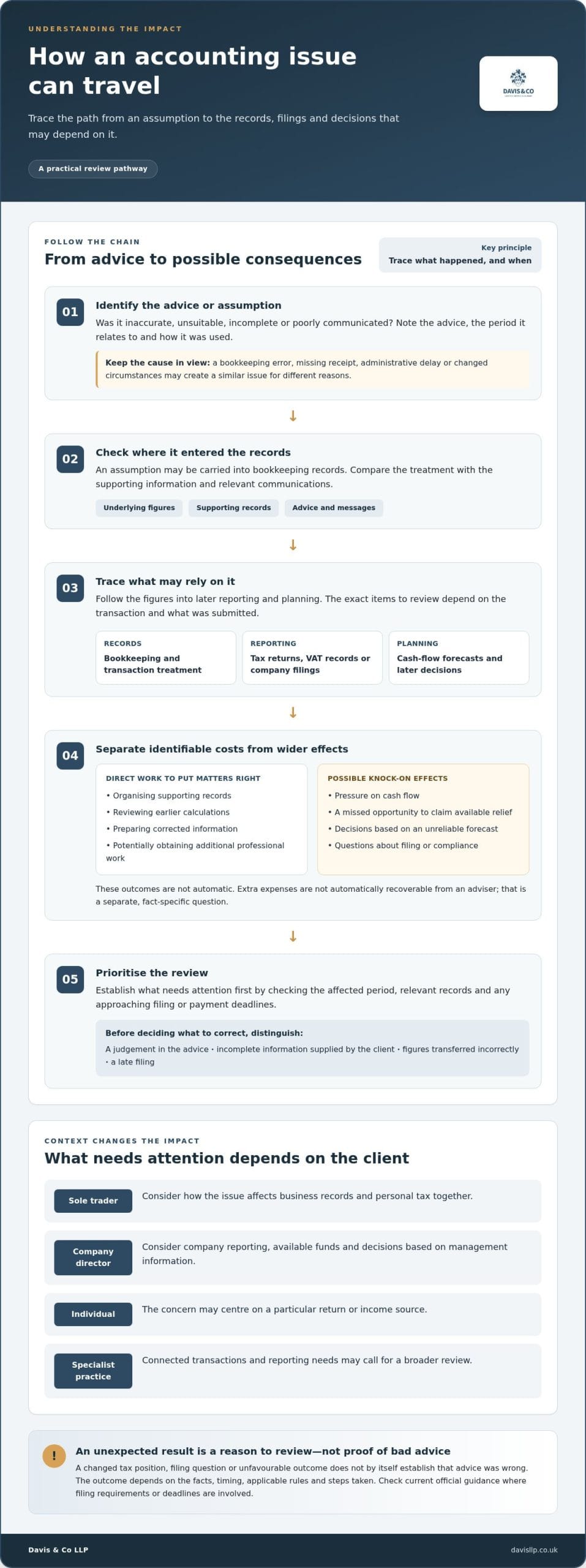
To understand the cost of bad accounting advice UK taxpayers and businesses may face, trace what happened, when it happened and how the advice was used. An incorrect assumption might pass from the records into a return or forecast, then influence later decisions. Possible consequences include time spent reviewing records and correcting calculations, a missed opportunity to claim available relief, pressure on cash flow or questions about compliance. None is automatic. The outcome depends on the facts, timing, applicable rules and steps taken.
Direct costs versus knock-on consequences
Some costs are straightforward to identify. You may need to organise supporting records, review earlier calculations or prepare corrected information. Additional professional work may also be needed. Whether extra expenses can be recovered from an adviser is a separate, fact-specific question, not an automatic result of finding an error.
Wider effects can be harder to measure. If an inaccurate forecast leads a business to delay investment or commit funds it expected to have available, the operational impact depends on the decision and circumstances. A missed relief may affect the tax position, while a delayed correction may raise further compliance concerns. Assess these possibilities against the relevant rules rather than assuming they will occur. The concept of professional negligence may be relevant where advice is alleged to have fallen below an appropriate standard and caused loss. Whether that applies requires a case-specific assessment.
Direct costs are the identifiable work and expense of putting matters right. Wider costs may include financial pressure and decisions made using an unreliable picture.
Why the impact differs between clients
A sole trader may need to understand how an accounting issue affects business records and personal tax together. A company director may also need to consider company reporting, available funds and decisions based on management information. An individual taxpayer’s concern may centre on a particular return or income source. A specialist practice, such as a dental practice, may have more connected transactions and reporting needs.
Deadlines can affect what needs attention first. Complex transactions or cross-border circumstances may call for a broader review of the relevant rules and records. The financial impact cannot be estimated responsibly without those details. Start by identifying the advice, the period it relates to and the decisions it influenced. Then separate confirmed costs from possible consequences that still need investigation.
How does poor accounting advice create financial and compliance risks?
An accounting issue can travel further than the original calculation. An incorrect assumption may be entered into bookkeeping records, carried into a tax return or VAT record, and then reflected in a cash-flow forecast. If nobody spots it, later decisions may rely on the same inaccurate picture. The type of problem matters: a technical accounting error differs from unsuitable tax planning, advice that omits an important qualification, or a communication failure that leaves the client unsure what to do.
Illustrative example: A fictional business receives unclear advice about how to treat a transaction. The treatment is recorded, used in a return and incorporated into management accounts. A later review raises questions about the original assumption. The business may need to revisit its records and consider whether a filing or forecast is affected. This example shows how an issue could develop, not a prediction of a penalty or particular outcome.
An early review can help identify which records, filings and decisions may depend on the advice in question, limiting avoidable follow-on work.
Tax, filing and reporting issues
Inaccurate information may mean reviewing a Self Assessment return, VAT record or company filing. Whether anything needs correction depends on what was submitted and the facts behind it. HMRC and Companies House processes, deadlines and possible consequences vary by filing and timing. Check current official guidance before taking action. A mistake does not automatically mean a penalty will apply; the relevant rules and circumstances matter.
Identify the source of the discrepancy, too. An incorrect judgement in the advice, incomplete information supplied by the client, an error transferring figures and a late filing are different problems. Separating them helps establish what needs review and which records or communications are relevant.
Cash flow and business decisions
Management accounts are useful for decision-making only when their assumptions and underlying figures are reliable. Incomplete information or delayed advice can make it harder to plan for tax payments, assess available cash or judge whether a commitment is affordable. A forecast error could also influence decisions about hiring, investment or distributions, although the effect depends on the decision and the business’s wider position.
For example, a fictional company director relies on management accounts that do not reflect a relevant liability when considering recruitment. After reviewing the figures, the director may need to reassess the timing of that decision. A loss is not inevitable. The point is that unclear or inaccurate information can leave less time for sound planning. Management accounts support can help businesses maintain a clearer view of performance and cash flow.
How can you assess accounting advice before relying on it?
A confident answer is not enough on its own. Useful advice should make clear which question it addresses, which facts it relies on and what could change the conclusion. Before acting, consider whether the recommendation fits your circumstances, explains the practical steps involved and tells you what happens next. These checks can help you manage the cost of bad accounting advice UK clients may face without assuming every unwelcome outcome points to poor advice.
| What to assess | What useful support looks like |
|---|---|
| Scope | It’s clear which question the advice covers and what falls outside its scope. |
| Relevant expertise | The adviser understands the tax or accounting area involved and how it relates to your circumstances. |
| Explanation quality | Assumptions, options and material risks are explained in terms you can follow. |
| Review processes | The records and information used to reach the conclusion are identified and checked appropriately. |
| Ongoing support | You know what action is needed, who is responsible and whether a deadline or later review matters. |
What clear, useful advice should explain
Look for a defined question, the facts and records behind the conclusion, and any assumptions that could affect it. Clear communication sets out relevant options and risks in plain English, then identifies practical next steps, such as information to provide or a deadline to consider. For significant recommendations, keep a written record of the advice and the actions you agreed to take. This gives both parties a clear reference if circumstances or understanding later change.
Matching expertise to your circumstances
Routine bookkeeping or business reporting differs from questions involving personal tax, property, trusts, international circumstances or a dental practice. A change in ownership, income sources or cross-border activity may also make a straightforward answer less suitable. Credentials and relevant experience can help you assess an adviser’s background, but neither guarantees a particular tax outcome. Davis & Co LLP provides personal and business accounting support for circumstances where these areas overlap.
For more on assessing professional fit, read our chartered accountant selection guide. Business owners may also find our small business accountant guide useful when considering the support their reporting and compliance needs require.
What should you do if you suspect bad accounting advice?
Pause before changing figures or submitting a correction. A methodical review can help establish what happened, protect important records and identify time-sensitive obligations. The right response depends on the filing, period and facts, so do not assume a penalty, refund or particular outcome is certain.
Organise the facts and documents
Preserve the material that may explain the advice and how it was used. Gather engagement terms, written recommendations, accounts, tax returns, relevant transaction records and correspondence. Keep original documents intact. Do not delete, overwrite or alter records to make them appear consistent.
Next, create a concise timeline showing when you received the advice, what information you provided, which decisions followed and when relevant filings or payments were made. Separate confirmed facts from assumptions and unanswered questions. This helps identify the affected period and focus the review on the issue rather than speculation.
Review the position and agree next steps
Check whether a tax return, VAT submission, company filing or payment deadline is approaching. The correction process and timing depend on the type of filing and current rules, so verify the relevant HMRC or Companies House guidance before acting. If a deadline may be close, make that clear when seeking an explanation and establish what needs attention first.
Ask for a written explanation of the issue, including the advice given, the assumptions behind it, the records considered, potential implications and recommended next steps. If a correction is proposed, understand what information supports it and which filing or period it relates to. Avoid making unsupported changes just to resolve uncertainty quickly.
Formal complaints and questions of liability require careful, case-specific handling. Keep a record of the concern raised and any response. Verify applicable complaint processes or other guidance instead of assuming a particular route or remedy applies. For broader context on UK tax matters, see our UK tax advice guide.
A clear timeline and complete records can make the next discussion more focused. For context on personal tax or business accounting concerns, see Davis & Co LLP’s accounting services.
How can Davis & Co LLP help you make a considered accounting decision?
When advice appears unclear or unsuitable, the next step is to understand the issue in context, not to assume a particular correction or outcome is guaranteed. Davis & Co LLP is an independent partnership of Chartered Certified Accountants supporting individuals and businesses across the UK. Our accounting and tax services are shaped around the circumstances involved, helping clarify the position and identify practical next steps.
The right starting point depends on whether the concern relates to an individual’s tax affairs, a business’s records and reporting, or a specialist tax matter. Where personal and business affairs overlap, considering them together can help build a clearer picture. The cost of bad accounting advice UK taxpayers and businesses may face cannot be assessed from a label alone. It depends on the records, advice, decisions and rules relevant to the case.
Support shaped around the issue
For an individual, personal tax services can help clarify the relevant information and tax question. A business concern may call for a closer look at bookkeeping, VAT compliance or management accounts. If the issue involves financial reporting or assurance, audit and assurance expertise may be relevant. The focus is on understanding the circumstances, explaining the analysis and setting out useful actions, not promising tax savings or a predetermined result.
Specialist context matters. Property or trust-related tax questions may require analysis specific to those affairs. International tax planning can address cross-border circumstances, while dental professionals and practices may need advice informed by the particular features of their work. For information on a specific HMRC-related concern, our HMRC tax warning guide provides further context.
A practical next step
An initial conversation can help clarify what needs attention and which information will assist the review. Outline the advice or filing in question, the period involved, any deadlines you know about and the documents available. Recommendations depend on the facts and applicable rules, so proposed next steps should follow a considered review, not assumptions about liability, penalties or refunds.
If you’re concerned about advice you’ve received, discuss your accounting or tax concerns with Davis & Co LLP.
Take a measured next step
The cost of bad accounting advice in the UK can include more than correction work. An inaccurate assumption may also affect tax or compliance decisions and the information you rely on to run a business. The impact depends on your circumstances, so distinguish confirmed costs from possible consequences before deciding what action is needed.
If advice or a filing seems questionable, preserve the relevant records, identify the period affected and note any approaching deadlines. Then seek a clear explanation of the assumptions, implications and possible next steps. A careful review can help you move from uncertainty to an informed decision without presuming that a penalty, refund or remedy is certain.
Davis & Co LLP supports individuals with personal tax services and businesses with accounting needs. If you’d like to discuss your circumstances, contact Davis & Co LLP about your accounting or tax concerns. With the relevant facts in view, you can decide on your next step with greater clarity.
Frequently Asked Questions
Is bad accounting advice always the accountant’s responsibility?
Not necessarily. Responsibility depends on the advice requested, the information the client supplied, the agreed scope of work and how the advice was communicated and acted upon. An inaccurate result may also stem from incomplete records, changed circumstances or a misunderstanding. Keep relevant documents and build a timeline of advice, decisions and filings before drawing conclusions. The outcome alone is not enough to determine who was responsible or whether the advice was unsuitable.
Can bad accounting advice lead to an HMRC penalty?
It can contribute to a compliance problem, but a penalty is not automatic. The relevant rules depend on the tax, filing, facts, timing and steps taken to address the issue. Professional advice does not necessarily remove all exposure, just as discovering an error does not mean a penalty will apply. Check current HMRC guidance for the relevant circumstances and obtain a case-specific review before deciding what action to take.
How much can bad accounting advice cost in the UK?
There’s no reliable single figure for the cost of bad accounting advice UK readers might face. The impact could include reviewing records or correcting work, as well as possible tax, compliance, cash-flow or business-decision consequences. These effects depend on the facts and cannot be estimated responsibly without examining them. Start by identifying the issue, the period affected, any relevant deadlines and the information needed to assess the position.
What should I do if I think my accountant gave me wrong advice?
Preserve the advice, engagement documents, accounts, filings and related correspondence. Write down what happened, including key dates, decisions and any deadline that may be approaching. Ask for the advice and the assumptions behind it to be explained clearly. Avoid changing a filing or payment position based on guesswork. If the concern remains unresolved, arrange a suitably qualified review of the specific facts and current requirements before deciding on further steps.
Can I correct an HMRC return after receiving bad accounting advice?
A correction may be possible, but the process and timing depend on the type of return, tax, filing period and current HMRC rules. First establish what may be inaccurate and gather the supporting records. Do not submit an amendment based only on an assumption. Check the applicable process and deadlines against current HMRC guidance, then document the reason for any correction and retain the evidence that supports it.
How can I tell whether accounting advice is suitable for my business?
Suitable advice should address your actual circumstances, explain the information and assumptions behind its conclusion, and set out relevant options and next steps. Consider whether the adviser understands your business model, reporting obligations and any specialist tax issues involved. Clear written communication and an agreed scope help you understand what the advice covers. A confident tone or a low fee alone does not establish that a recommendation is appropriate for your business.
Should I change accountants if I am unhappy with the advice?
Changing accountants may be appropriate, but first clarify the concern and identify any deadlines or unfinished work that could be affected. Review your engagement terms and organise key records to support a clear handover. If you suspect a filing error or tax exposure, prioritise understanding the position before making further decisions. The right course depends on the facts, the work in progress and the continuity your personal or business affairs require.