A fixed monthly fee does not automatically cover both bookkeeping and accountancy. Fixed-fee accounting packages for SMEs can combine the two, but the agreed services and bookkeeping workload determine what is included. The package details matter as much as the monthly payment.
It’s understandable to want a predictable cost and clarity about what’s included. This guide explains how bookkeeping and accountancy services may be packaged, what can affect the scope and fee, and which services to look for when assessing a package. It also covers how business structure, transaction volume, VAT and payroll can shape the support an SME needs, helping you understand what a fixed fee represents before deciding on the right arrangement.
Key Takeaways
- Bookkeeping and accountancy can sit under one monthly fee, but the agreed package scope determines what work is covered.
- Understand how business structure and transaction volume affect the level of accounting support an SME needs.
- Assess whether VAT, payroll and tax reporting are included, rather than relying on the headline fee alone.
- Use the article’s UK cost context to compare package scope and identify the questions that matter for your business.
Are bookkeeping and accountancy included in the same monthly fee?
Bookkeeping and accountancy can be combined, but a fixed monthly fee covers only the work agreed. Compare the bookkeeping workload with the accounting, tax and reporting tasks included.
Monthly Packages and Workload Assumptions
A fixed monthly bookkeeping package is usually based on an agreed workload, not simply the size of the business. Transaction volume, income records, bank processing and the condition of the paperwork all affect the work involved. A sole trader with straightforward income may need a different scope from a limited company with regular sales and more complex records. Check which tasks and workload assumptions set the monthly fee.
Fees for Businesses with Employees or VAT
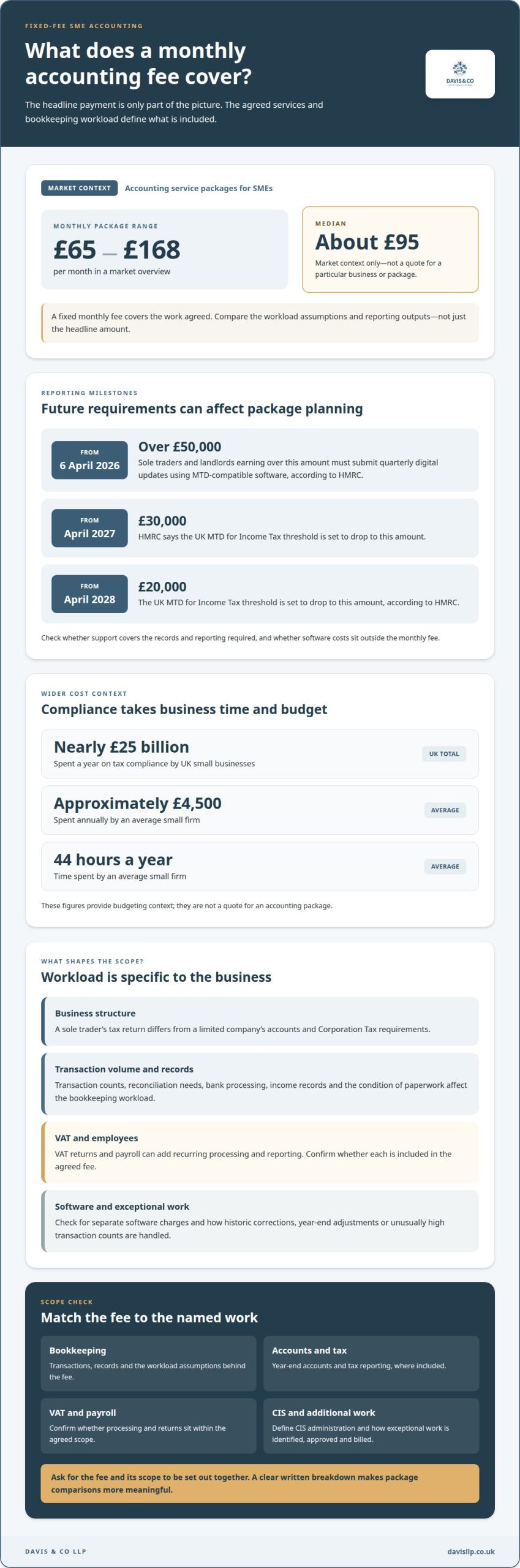
Employees and VAT registration can add recurring processing and reporting requirements. For example, a business with staff may need payroll processing, while a VAT-registered business may need VAT return preparation alongside bookkeeping. A market overview places accounting service packages between £65 and £168 per month, with a median of about £95. That range is market context, not a quote for a particular business or package.
Sole traders should distinguish bookkeeping from accountancy when assessing a package. Bookkeeping records business transactions; accountancy may also cover year-end accounts and tax reporting. The right scope depends on income, record volume and reporting needs. When comparing packages, match each task to the work required, then compare workload assumptions and reporting outputs. This helps establish whether the monthly fees cover comparable support.
Ask for the fee and scope to be set out together. The fee for an individual engagement depends on its scope and is given after a quote request; transaction volume, staff, VAT and reporting affect it. HMRC says the UK MTD for Income Tax threshold is set to drop to £30,000 from April 2027 and £20,000 from April 2028. These changes make future reporting requirements relevant to package planning.
HMRC’s thresholds do not make every service part of one monthly fee. Confirm which work is included, how additional transactions are handled, and whether payroll or VAT processing sits within the agreed scope. A clear written breakdown gives you a sound basis for comparing fixed-fee accounting packages for SMEs.
Included accounting, tax, VAT and payroll services
A UK limited company has company accounts and Corporation Tax obligations. Its package may also cover bookkeeping, management reporting, VAT returns and payroll, depending on its circumstances. The contract should name each included task and explain how often the work is completed. Payroll and VAT processing affect the ongoing workload, while transaction volume influences the bookkeeping required.
HMRC states that, from 6 April 2026, sole traders and landlords earning over £50,000 must submit quarterly digital updates using MTD-compatible software. Ask whether the agreed support covers the records and reporting needed for this process, and whether software costs sit outside the monthly accounting fee.
Payroll administration can include processing employee pay and handling related PAYE tasks. Where staff numbers or pay arrangements change, the processing workload may change too. CIS support is another item to define explicitly: if construction work applies, establish whether CIS-related administration is included or treated as exceptional work. Don’t assume it is covered just because bookkeeping appears in the package.
To budget accurately, separate recurring services from occasional work. VAT return preparation, regular payroll and bookkeeping may form part of ongoing support; year-end adjustments, historic corrections or unusually high transaction counts may be charged separately. The agreement should explain how additional work is identified, approved and billed, without leaving the boundary between routine processing and exceptional work unclear.
For a practical comparison, group the contract details under bookkeeping, tax, VAT, payroll and CIS, then note any exclusions beside each. Check whether the quoted monthly accounting scope changes when transaction volume, employees or reporting needs change. This makes package differences easier to assess and helps identify likely additions before work begins. Businesses seeking coordinated payroll processing can consider payroll administration support as part of their accounting arrangements.
Factors affecting fees, including business structure and transaction volume
Business structure shapes the work behind an accounting package. A sole trader’s tax return differs from a limited company’s accounts and Corporation Tax requirements. Transaction volume, reconciliation needs, software and record quality also affect the workload. Turnover can indicate business scale, but does not define the package on its own. Two businesses with similar income may need different support if their transactions or reporting needs differ.
A tailored package should reflect the work required, rather than relying on turnover bands alone. Assess the scope by listing recurring bookkeeping, reporting and tax tasks, then identifying exceptional work. Ask how changes in transaction counts or business structure affect the agreement. This can bring separate software charges or extra reconciliation work to light before you compare annual budgets.
Annual budgets vary with the needs of each business. Examples can include different combinations of software, external work, and staff or owner time.
Fixed costs also belong in the wider financial setting. UK small businesses spend nearly £25 billion a year on tax compliance, while an average small firm spends approximately £4,500 annually and 44 hours a year. These figures provide context for budgeting, not a quote for an accounting package. Reviewing the full cost alongside internal administration helps clarify what a package may replace.
UK SMEs can change accountants or cancel a fixed-fee package, subject to the contract’s notice and termination terms. Review those terms alongside outstanding charges, final tax return or reporting responsibilities, and the transfer of records. Agreeing a clear handover date helps maintain continuity during the change.
How much do UK accountants charge for fixed-fee SME packages?
There is no single fee for every UK SME. A fixed-fee package is based on its agreed scope and expected workload. A business with straightforward records needs a different level of support from one with complex reporting. The fee for a particular package depends on the work involved and is provided after a quote request.
Transaction volume is a practical starting point for assessing workload. Each sale, purchase, bank entry or adjustment may require processing and reconciliation. The number of monthly transactions matters, as do record quality and how consistently information is supplied. Processing clean, organised records can involve different work from correcting substantial gaps or errors.
Business structure also changes the services an accountant may need to cover. A sole trader’s reporting differs from a limited company’s accounts and Corporation Tax responsibilities. VAT registration, payroll and management reporting can add ongoing tasks. Consider each requirement separately, then compare package scopes rather than treating two monthly fees as equivalent.
Read the engagement terms for inclusions and exclusions. Look for the treatment of software, year-end work, tax returns, VAT submissions, payroll changes and exceptional corrections. A low headline fee may cover fewer tasks; a broader package may include more recurring work under one agreement. Ask how changes in staff, transaction volume or reporting requirements affect the scope.
For a useful assessment, prepare a concise outline of your structure, records, VAT position, payroll needs and reporting deadlines. This gives the accountant a clearer basis for defining the work and preparing a quote. It also helps you compare proposals by deliverables, assumptions and additional-work terms, rather than by the monthly figure alone. Discuss your accounting requirements to establish a suitable scope for your business.
Davis & Co LLP: Property Accounting
Davis & Co LLP provides Property Accounting for businesses and individuals managing property-related financial records. It can help when property activity adds reporting needs to an SME’s accounts or when clearer financial oversight would support business decisions.
For businesses with cross-border interests, International Tax Planning addresses international tax considerations. Business Growth Acceleration and Cash Flow Management can also support SMEs reviewing their plans, financial position or cash flow. The appropriate service depends on the work involved and the business’s circumstances.
If property accounting or related financial support is relevant to your business, contact Davis & Co LLP to discuss your requirements.
Make your accounting arrangements work for what comes next
The right package should support more than routine reporting. Its scope should reflect your priorities and provide a clear basis for planning as the business develops. Treat fixed-fee accounting packages for SMEs as an ongoing business decision: review whether the agreed work still matches your operations when your direction or financial needs change.
Davis & Co LLP offers International Tax Planning, Business Growth Acceleration and Cash Flow Management. These services may be useful when your business decisions involve international tax, growth priorities or closer oversight of cash flow. A discussion can help identify which service best relates to your current needs.
Contact Davis & Co LLP to discuss the accounting and financial support relevant to your plans. A clear next step can help you approach future decisions with greater confidence.
Frequently Asked Questions
How Much Does Bookkeeping Cost in the UK in 2026?
Market accounting service packages typically range from £65 to £168 per month, with a median of about £95. This is a broad market benchmark, not a standalone bookkeeping quote or an individual firm’s fee. The cost of bookkeeping depends on the agreed work and business records. A useful comparison distinguishes bookkeeping alone from packages that also include accounts, tax work or other recurring services.
Monthly fee, hourly billing or annual package: what is the difference?
A monthly fee spreads agreed recurring work across regular payments, while hourly billing charges for the time spent. An annual package sets out services across the year, with payment terms defined in the agreement. For example, a business needing consistent processing may value predictable monthly billing, while occasional advisory work may be easier to scope separately. Compare payment timing, included tasks and charges for additional work.
Small Business Accounting Fees: What Should You Pay?
Choose a clearly defined scope that matches your business’s reporting needs, rather than deciding solely by the headline fee. Ask for the proposal to identify deliverables, payment frequency and any work billed separately. For example, distinguish year-end accounts from regular bookkeeping or management reporting. A written breakdown helps you judge whether the ongoing support matches what you need.
What do fixed-fee accounting packages for UK SMEs include?
Inclusions vary by agreement, but a package may combine bookkeeping with accounts, tax, VAT or payroll tasks. For example, an employer may need regular payroll processing alongside accounting work, while another SME may prioritise VAT reporting. The agreement should specify which tasks are covered and how changes are handled. Treat software, unusual corrections and advisory work as separate scope items unless the package expressly includes them.
What factors affect the price of an SME accounting package in the UK?
The main considerations are the work required, record quality and the complexity of the business’s reporting. Incomplete records may need more correction than organised records, while multiple income streams can add assessment work. The level of support matters too: routine bookkeeping differs from a package that includes management reporting or payroll administration. Ask how these circumstances affect the agreed scope and charges for additional work.
How do fixed-fee packages compare with hourly accounting fees?
A fixed fee sets a cost for defined work, while hourly billing varies with the time spent. A fixed arrangement can support budgeting when tasks and assumptions remain stable; hourly billing can suit occasional work that is difficult to scope in advance. For example, keep recurring bookkeeping distinct from a one-off correction. Compare how each method treats extra requests, changing workloads and work outside the original agreement.