Year-end accounts are a filing responsibility for registered UK companies. Limited companies must file statutory accounts with Companies House within nine months of their financial year-end, according to Companies House. Preparing for year-end accounting is easier when records, responsibilities and asset schedules are reviewed in good time.
Those accounts matter because they show how the business performed and help inform decisions for the year ahead. Closing the books can be challenging: a company’s financial year may not align with the UK personal tax year, which runs from 6 April to 5 April, and missing documents or unresolved discrepancies can delay the process.
This checklist explains why year-end closing needs careful preparation, which businesses must file accounts and when Companies House filings are due. It also covers practical checks for reconciling records and updating fixed-asset and depreciation schedules, helping you understand the work involved.
Key Takeaways
- Identify whether your business structure requires year-end accounts, then plan the relevant reporting work.
- Allow time to complete Companies House filings, as late accounts can lead to penalties.
- Bring your asset schedule up to date by recording additions and reviewing depreciation against your accounting practices.
- Property Accounting can help bring property-related records into the year-end process and support a clearer financial picture.
Why is year-end closing so difficult?
Year-end closing brings together transactions from a full financial period and checks that the records support the figures in the accounts. Preparing for year-end accounting can be demanding when invoices, payments and bank statements are stored separately or entered late. A missing receipt or unreconciled payment can put an expense in the wrong period and distort the final results.
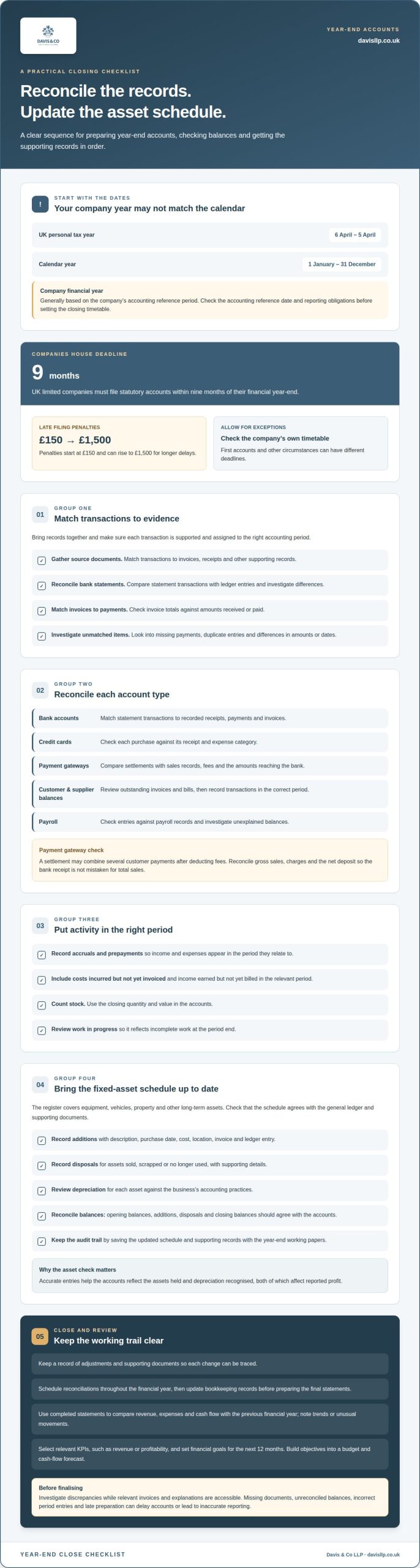
Three dates can shape the work. The UK personal tax year runs from 6 April to 5 April, while the calendar year runs from 1 January to 31 December. A company’s financial year is generally based on its accounting reference period, so it may follow neither date. Check the company’s accounting reference date and reporting obligations before setting the closing timetable.
Organise records by matching each transaction to its evidence and accounting period. Reconcile bank statements against ledger entries, investigate differences, and match invoice totals to payments received or made. Record accruals and prepayments so income and expenses appear in the period they relate to. If the business holds stock, arrange a physical count to establish its closing value.
Use the completed statements to assess performance and plan forward. Compare revenue, expenses and cash flow with the previous financial year, then note trends or unusual movements. Select relevant KPIs, such as revenue or profitability, and set clear financial goals for the next 12 months. Build those objectives into a budget and cash-flow forecast, allowing expected customer payments and supplier costs to inform decisions.
UK Corporation Tax rates depend on a company’s taxable profit and circumstances. To calculate taxable profit, start with accounting profit and apply tax adjustments, including relevant reliefs and disallowable expenses.
Common risks include missing documents, unreconciled balances, incorrect period entries and late preparation; these can delay accounts or lead to inaccurate reporting. For individuals, HM Revenue & Customs sets the UK dividend allowance at £500 for the 2025/26 tax year.
Companies House Annual Statement Filing Deadlines
UK limited companies must file statutory accounts with Companies House within nine months of their financial year-end. The deadline makes accurate reconciliations part of filing preparation, not a task to leave until accounts are ready. Late accounts filing penalties start at £150 and can rise to £1,500 for longer delays, according to Companies House. First accounts and other circumstances can have different deadlines, so the company’s filing timetable should reflect its own reporting position.
To reconcile bank accounts, invoices and expenses, match each bookkeeping entry to its source document and bank statement. Investigate unmatched payments, duplicate entries, and differences in amounts or dates. Any bank balance that does not agree with the ledger needs a clear explanation before the accounts are finalised.
Use a consistent sequence for each account:
- Match bank statement transactions to recorded receipts, payments and invoices.
- Reconcile credit card statements, checking each purchase against its receipt and expense category.
- Compare payment gateway settlements with sales records, fees and the amounts reaching the bank.
- Review outstanding customer invoices and supplier bills, then record transactions in the correct period.
- Check payroll entries against payroll records and investigate any unexplained balance.
These checks help ensure cash, credit balances, expenses and assets reflect the underlying activity. For example, a payment gateway may combine several customer payments after deducting fees. Reconciling the gross sales, charges and net deposit prevents the bank receipt from being mistaken for total sales. Keep a record of adjustments and supporting documents so every change can be traced.
Schedule reconciliations throughout the financial year, then update bookkeeping records before preparing the final statements. Managing accounts in this way makes discrepancies easier to investigate while the relevant invoices and explanations are accessible. Consistent bookkeeping services can support the process of keeping records organised and reconciled.
Updating fixed asset and depreciation schedules
Start with the fixed asset register, which records equipment, vehicles, property and other long-term assets. Add purchases made during the financial year, supported by invoices and payment records. For each asset, record its description, purchase date, cost, location and any disposal. These details help the year-end schedule agree with the general ledger and supporting documents.
Next, compare the register with the business’s actual assets and accounting records. Follow these steps:
- Match each addition to its purchase invoice and ledger entry.
- Record assets sold, scrapped or no longer used, with supporting disposal details.
- Review the depreciation charge for each asset against the business’s accounting practices.
- Check that the schedule’s opening balances, additions, disposals and closing balances reconcile to the accounts.
- Save the updated schedule and supporting records with the year-end working papers.
For example, if a business buys a vehicle during the period, the register should include its cost, purchase date and relevant depreciation. An asset no longer in use should not appear as though it were still available to the business. Accurate entries help the accounts reflect the assets held and depreciation recognised, both of which affect reported profit.
Stock, work in progress and accruals also need attention at year-end. If the business holds stock, count it and use the closing quantity and value in the accounts. Work in progress should reflect incomplete work at the period end. Record costs incurred but not yet invoiced, and income earned but not yet billed, in the relevant period.
Finally, check that your accounting software has carried updated asset values and depreciation into the correct period. Keep clear records of the assumptions and adjustments behind each figure so they can be traced when accounts are prepared or reviewed. A consistent register also makes future asset purchases, disposals and depreciation reviews easier to manage.
Businesses required to file year-end accounts
Registered companies in the UK are legally required to submit year-end accounts. Sole traders and partnerships use their year-end figures to support Self Assessment tax returns, while limited companies prepare accounts for company reporting and their Corporation Tax position. First identify the business structure, then organise records for its relevant filing responsibilities.
Making Tax Digital and HMRC reporting also rely on organised financial records. Maintain digital transaction records, retain invoices and expense evidence, and categorise income and costs in bookkeeping software. This creates a clearer audit trail and helps you prepare information for relevant returns, while recognising that reporting obligations vary by business.
Use this checklist throughout the year, rather than leaving everything until closing:
- Keep business and personal transactions separate where the structure allows, so records show which activity belongs to the business.
- File invoices, receipts and bank records by date and category, making missing documentation easier to identify.
- Record sales, expenses and payments promptly, so year-end figures reflect activity across the financial period.
- Review bookkeeping entries against statements and investigate differences, preventing unresolved balances from carrying into accounts.
- Maintain payroll, VAT and tax documents where relevant, so reporting information is available alongside the main ledger.
- Set internal deadlines for collecting records and resolving queries, giving the closing process a clear sequence.
A sole trader’s checklist centres on business income and expenses that support Self Assessment. A partnership also needs records supporting its business figures and partners’ reporting. A limited company needs accounts that present its financial position and support Corporation Tax reporting. The same bookkeeping records may feed different returns, but each structure has its own filing duties.
If missing records, unresolved queries or reporting deadlines are complicating your year-end process, discuss year-end reporting with Davis & Co LLP. Clear bookkeeping and structured accounts can help bring the records together for the obligations that apply to your business.
Davis & Co LLP: Property Accounting
Davis & Co LLP provides Property Accounting for businesses that need property-related figures included in their year-end accounts. This can be useful when rental income, property expenses, acquisitions or disposals make record-keeping more involved, or when you need a clearer view of how property activity affects the business’s financial position.
Well-organised property records connect transactions to the right accounting period and support a considered review of income, costs and assets. Where relevant, Davis & Co LLP can also bring its International Tax Planning, Business Growth Acceleration and Cash Flow Management expertise into the wider discussion. The focus depends on your business activity and the questions raised by its accounts.
If property transactions are complicating your year-end accounts, contact Davis & Co LLP to discuss your accounting needs.
Make year-end preparation part of your business planning
Use information from the year-end close not only to complete reporting, but also to guide decisions for the period ahead. A clear view of income, costs and cash flow can show where planning needs attention, whether you are reviewing growth priorities, considering international tax implications or improving cash-flow management. Davis & Co LLP offers Business Growth Acceleration, International Tax Planning and Cash Flow Management to support these connected needs.
Preparing for year-end accounting works best as an ongoing discipline, not a once-a-year task. Keeping records current and reviewing financial information as the business develops can support better-informed decisions and a more orderly close. The right focus depends on your business’s circumstances and priorities.
To discuss how Davis & Co LLP can support your business, contact Davis & Co LLP. A considered next step can help you move into the new financial period with greater clarity.
Davis & Co LLP can support your year-end accounting
Davis & Co LLP offers bookkeeping services, management accounts and cash flow management to help organise financial records and prepare for year-end. The firm also provides audit and assurance.
For related tax and compliance needs, Davis & Co LLP also offers VAT compliance, payroll services, personal tax services, trust tax services and international tax planning. Contact the firm to discuss which services suit your year-end needs.
Frequently Asked Questions
Why Are Year-End Accounts Important for Small Businesses?
Year-end accounts give business owners a structured basis for reviewing their financial position and making decisions. Comparing actual results with the budget, for example, can show whether rising costs are affecting profitability or cash flow needs closer attention. Accounts also support reporting obligations. Treat them as a management tool as well as a formal record, and use the findings to set priorities for the next financial period.
What is the year-end close?
The year-end close finalises a business’s records for its accounting period and prepares the figures used in its accounts. It brings together completed transactions and relevant adjustments to produce settled figures for reporting. Document unusual entries and the reasons for them, so a later review can trace how significant balances were reached.
What should a year-end accounting checklist include?
A practical checklist should include task owners, internal deadlines and a record of unresolved questions, alongside the core accounting work. For example, assign someone to gather missing evidence and another person to review unusual movements before the accounts are approved. Include a final sign-off point to clarify responsibility and distinguish completed work from items still awaiting an explanation or document.
Are end of year accounts figures exclusive of VAT?
Not in every case. The treatment depends on whether VAT can be reclaimed and how the transaction is recorded. For a VAT-registered business, input and output VAT records should agree with submitted VAT returns, while the accounts should reflect the relevant income, expenses and balances. Review differences between bookkeeping and VAT records before finalising the figures, particularly where transactions need correction or explanation.
What are the UK deadlines for filing year-end accounts?
For a UK limited company, statutory accounts are generally due at Companies House within nine months of its financial year-end, according to Companies House. A company’s first accounts can follow a different timetable: the first annual accounts are due 21 months after registration with Companies House. Establish the applicable due date early, since the reporting period and circumstances affect the filing schedule.
What deadlines do I need to know for Company Tax Returns?
A UK company’s Company Tax Return is normally due 12 months after the end of its Corporation Tax accounting period, according to HM Revenue & Customs. Corporation Tax payment has a separate deadline: it is usually due nine months and one day after that period ends. Keep both dates in the business calendar, because filing the return and paying the tax are distinct obligations.