A chartered accountant can help you identify eligible claims and expenses, plan your tax affairs and reduce the risk of errors or missed deadlines. The benefits of using a chartered accountant for tax returns include having professional support to prepare an accurate return and understand what you may be able to claim. For an online Self Assessment return, the filing deadline is 31 January.
It’s understandable to want to keep your tax affairs manageable and avoid paying more tax than necessary. An accountant can organise the process, particularly when your income or finances are complex, and help you understand the information and deadlines involved.
This article explains how an accountant can help with tax planning, review relevant claims and expenses, and reduce the risk of overlooking a filing deadline. It also covers when professional support may be useful and what to consider if you manage your return yourself.
Key Takeaways
- Review your income, records and expenses systematically to make tax-return preparation more manageable and reduce the risk of overlooked details.
- Tax planning can help you understand how financial decisions affect your tax position before you file.
- Check whether business costs and other claims are relevant to your circumstances, and keep clear records to support them.
- Map out key HMRC dates and responsibilities early, particularly when you’re newly self-employed or your finances are more complex.
1. How Can Accountants Help Save You Money On Tax?
A chartered accountant can save time by organising your financial records and reviewing them before preparing a return. Rather than assembling receipts, income details and business accounts alone, you can follow a clear process for providing and checking information. That leaves more time for business priorities and can make an annual filing deadline less stressful. The benefits of using a chartered accountant for tax returns include a structured review of your circumstances, not just help completing forms.
Potential tax savings often depend on decisions made before a return is due. An accountant can review your income, costs and business activity, then identify relevant tax reliefs or financial inefficiencies. For example, checking recurring expenses against supporting records may reveal an eligible claim you had overlooked. Tax planning can also help you understand how a planned change to your business or income could affect future returns. Any savings depend on the rules and claims relevant to your circumstances, so accurate records and careful classification matter.
Planning ahead can also help prevent avoidable penalties. An accountant can track filing responsibilities, organise the records needed for a return and flag information that requires attention. For a self-employed professional, this may include calculating accurate quarterly or annual tax payments. A Self Assessment bill of £2,000 could require a £1,000 payment on account towards the following year’s tax, making £3,000 due by 31 January. Understanding that payment structure in advance can help with cash-flow planning and reduce deadline pressure.
A chartered accountant can help you respond to HMRC enquiries by reviewing relevant records, guiding correspondence and helping resolve issues. They can also explain how to correct a return and support communication about a tax disagreement. For a business, management accounts provide a regular view of income and costs, which can help identify emerging issues before the next annual return. Organised records, forward planning and timely action can make tax decisions easier to manage and help reduce the risk of errors, missed obligations and penalties.
2. Why use a tax accountant instead of filing taxes yourself?
Preparing a return yourself means interpreting tax rules and checking every entry against your records. A chartered accountant can review your income, expenses and calculations, then prepare the relevant return and paperwork. To help ensure figures are accurate and follow HMRC rules, they compare the information you provide with supporting documents and query inconsistencies before filing. This can offer business owners greater peace of mind, although you remain responsible for providing complete, accurate information.
Tax return support can cover tax codes, filing requirements, financial records and the tax consequences of planned decisions. Proactive planning means reviewing choices before a return is due, rather than considering tax only at filing time. For example, a business owner considering expansion can assess how the proposed structure may affect tax and cash flow. Strategic advice connects these decisions with longer-term aims, such as business growth or retirement planning.
Pension planning can also be part of a wider financial review. An accountant can discuss pension arrangements and support a business setting up a scheme intended to meet HMRC requirements. Relevant considerations include the business’s circumstances, existing arrangements and intended contributions. This makes pension decisions part of forward planning rather than an isolated entry on an annual return.
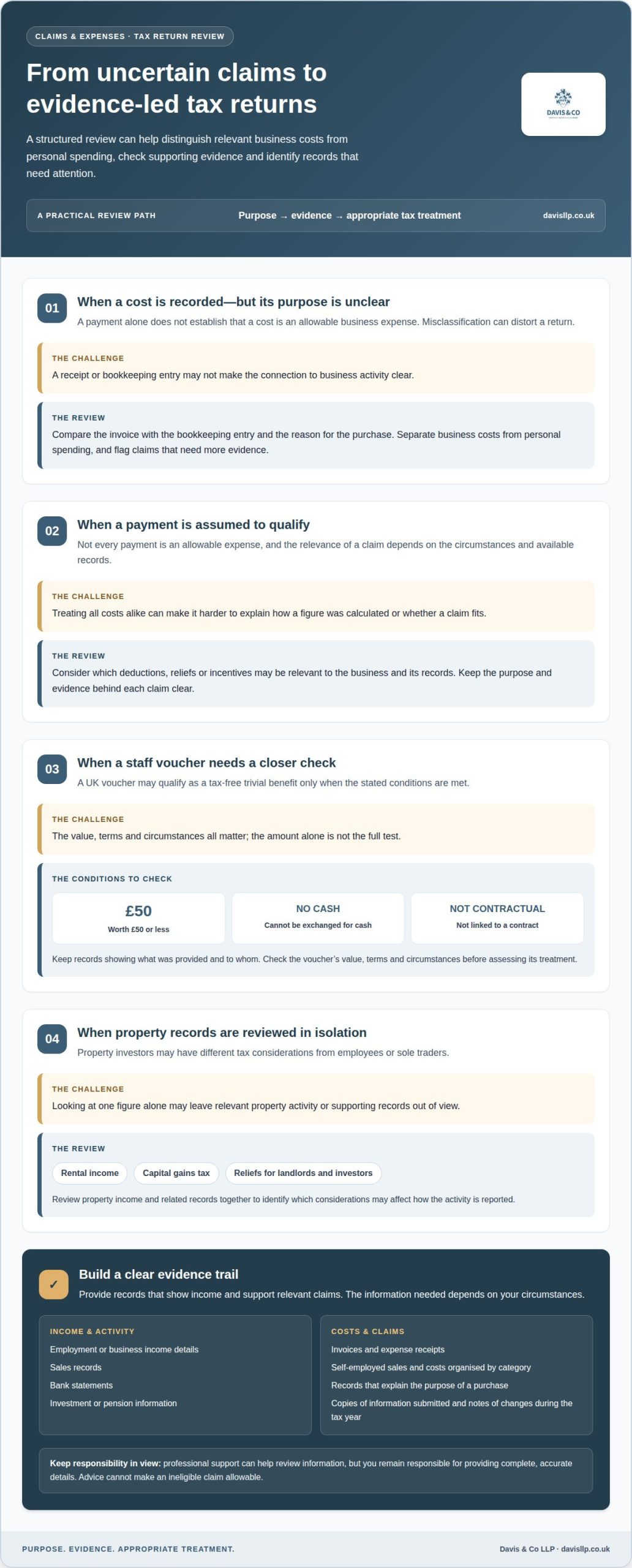
For your return, provide records that show your income and support your claims: employment or business income details, bank statements, invoices, expense receipts, and information about investments or pensions. If you’re self-employed, organise sales and costs by category. Clear, complete documents allow an accountant to reconcile figures and spot gaps. Keep copies of the information you submit and note any changes during the tax year.
Hiring an accountant does not remove the need to give accurate information or make decisions about your finances. Incomplete records can limit the quality of a review, and professional advice cannot make an ineligible claim allowable. For support with individual tax matters, explore personal tax services.
3. Identifying tax-efficient claims and expenses
Tax-efficient filing starts with matching each claim to its purpose and supporting evidence. A chartered accountant can review sales records, invoices and expense categories, then distinguish business costs from personal spending. For business owners, this knowledge helps assess which deductions, reliefs or incentives may apply to their situation. A clear record also makes it easier to explain how a figure was calculated.
Rather than treating every payment as an allowable expense, an accountant can consider its connection to business activity and the records available. For example, they may compare an invoice with a bookkeeping entry and the reason for the purchase. They can advise on potentially relevant deductions and tax reliefs, and flag claims that need more evidence. Accurate categorisation matters because a misclassified cost can distort your return.
Employee benefits are another area for review. In the UK, a voucher may qualify as a tax-free trivial benefit if it is worth £50 or less, cannot be exchanged for cash and is not linked to a contract. An accountant can examine the voucher’s value, terms and circumstances before assessing its treatment. Business owners should retain records showing what was provided and to whom.
Property investors face different tax considerations from employees or sole traders. Rental income, capital gains tax and reliefs for landlords and investors can all affect how property activity is reported. An accountant can review property income and related records together, then identify the relevant tax rules and reliefs. This helps ensure a claim is considered as part of your wider property position.
Start by grouping documents by income source and expense type. Keep invoices, receipts and notes explaining the business purpose, and separate personal spending from business transactions. Then ask an accountant to review the records, flag missing evidence and assess relevant claims before filing. Professional knowledge can help identify overlooked savings, but eligibility depends on the rules and the facts behind each claim. A member of a professional body also works within its standards, supporting a disciplined approach to tax work.
4. Avoiding missed HMRC deadlines
Different Self Assessment responsibilities have different dates, so record each deadline against the relevant task. According to HM Revenue & Customs, the deadline to register as self-employed in the UK is 5 October. The paper tax return deadline is 31 October, while online returns are due by 31 January. Tax owed through Self Assessment is generally due by 31 January.
Eligible taxpayers who want tax collected automatically from PAYE wages or a pension must submit their return by 30 December. This earlier date gives HMRC time to collect the amount through payroll. Mark it separately from the online filing deadline, since meeting one date does not mean meeting the other. A calendar reminder should specify both the action and the tax year involved.
Business compliance can involve more than Self Assessment. VAT returns and payroll obligations have their own schedules, so maintain a calendar for each responsibility. For example, filing a tax return does not meet a separate VAT submission obligation. Assigning responsibility for each submission helps prevent deadlines from being lost among routine financial tasks.
Build a practical system by listing each HMRC obligation, its due date and the records needed to complete it. Gather income, expense and payroll information early, leaving time to resolve missing details before submission. Review the calendar when circumstances change, such as starting self-employment, employing staff or registering for VAT. These changes can affect the regulations and filing responsibilities that apply.
For businesses managing staff submissions, arrange payroll support to help organise payroll information and related responsibilities. A clear timetable, complete records and assigned ownership make it easier to maintain compliance and act before a deadline becomes urgent.
Davis & Co LLP: International Tax Planning
Davis & Co LLP provides International Tax Planning for individuals and businesses with financial affairs involving more than one country. This can be relevant if you have overseas income, investments or business activity to consider alongside UK tax reporting. Reviewing how these interests fit together can clarify what information matters to your tax position and should inform your planning.
If you need support with personal tax matters, Davis & Co’s Personal Tax Services can help. Business owners may also find Business Growth Acceleration or Cash Flow Management relevant when tax decisions intersect with wider commercial plans. The right focus depends on your circumstances and the questions you need to resolve.
To discuss your tax-planning needs, contact Davis & Co LLP.
Make your next tax decision with clarity
Your next return can be more than an annual administrative task. Use it as an opportunity to review how your financial choices align with your plans, particularly if your income, work or business circumstances are changing. A conversation before those changes take effect can help you understand which information to keep and what questions to raise.
The benefits of using a chartered accountant for tax returns can extend beyond preparing a submission. Professional input can help you keep better-ordered records and understand the tax implications of future decisions. The value lies in advice that reflects your circumstances, rather than assumptions or leaving every decision until filing time.
If you’re ready to consider your next step, start a conversation with Davis & Co LLP about your tax position and priorities. A clear discussion can help you decide what support is appropriate for the decisions ahead.
Davis & Co LLP and tax return support
Davis & Co LLP provides Personal Tax Services and Trust Tax Services for people preparing tax returns. Its International Tax Planning and Property Accounting services may also be relevant when your tax affairs involve overseas matters or property.
Turn to Davis & Co LLP when you want support with your tax return or need help understanding which services fit your circumstances. Businesses can also access VAT Compliance, Payroll Services, Bookkeeping Services and Management Accounts.
Frequently Asked Questions
How Can Accountants Help Save You Money On Tax?
An accountant can review how different income sources affect your overall tax position and identify planning opportunities. For example, someone with both employment income and rental receipts may need to consider how each fits into their financial picture. Advice can also help you assess upcoming choices, such as changing how you receive income, before they affect your records or return.
Why Use a Qualified Chartered Accountant?
A chartered accountant holds a professional qualification and works under the standards of a professional body. In the UK, anyone can legally call themselves an accountant, so the chartered designation distinguishes a professional qualification from the general job title. That distinction can matter when you need structured tax advice for complex personal or business finances.
Do small businesses need a corporate tax accountant?
No. Small businesses aren’t required to hire an accountant, and some owners manage their own records and filings. Professional support may become useful as a business adds income streams, employs staff, registers for VAT or faces more complex corporation tax decisions. Consider the time required, your confidence with accounting records and the complexity of your obligations when deciding.
What are the benefits of hiring a tax accountant?
The benefits of using a chartered accountant for tax returns include professional review and advice tailored to your financial circumstances. This can be useful when personal and business finances overlap, or when overseas income brings additional reporting considerations. An accountant can help you understand the information you need to make decisions, not just the figures required for a submission, so you can plan with greater clarity.
Why use a tax accountant instead of filing taxes yourself?
Filing yourself may suit a straightforward financial situation when you understand the records and obligations involved. An accountant can add value when a return includes several income sources, unfamiliar tax treatment or decisions with longer-term consequences. Their review offers another perspective on how figures have been recorded and reported. You still need to provide complete information and remain involved in important decisions.
Can a chartered accountant identify tax reliefs and deductions an individual might miss?
Yes. An accountant can assess your income, relevant expenditure and supporting evidence to identify deductions, reliefs or incentives that may apply. For instance, an individual with investment income and employment earnings may need a broader review than someone with one simple income source. The accountant can explain the basis for a potential claim and help distinguish eligible items from personal costs.